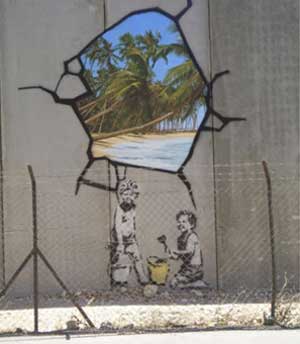
art you can say that is not art? No more eloquent art
Monday, December 29, 2008
Sunday, December 28, 2008
Tuesday, December 2, 2008
Walgreens Xbox Live Card
friendship and some old elements in the Christmas traditions
For Luz Maria Malagon Quintana
Fungi and Christmas traditions
Each year, millions of homes around the world celebrate with joy one of the largest and most widespread traditions on record in the history of humanity: Christmas. For several centuries, on 25 December was not only a key date in the Christian religion, but also within other religions around the world.
Death and resurrection
The fungus: one of the most bizarre life forms. There is a plant or an animal. Not only seems to come from nowhere, arguably which is capable of being born where there is death. They are found in the strangest places, and strange and varied are their ways. The fungus can feed, can cure, can kill or permanently for a moment, then show us life again. The fungus is a link between life, death, what is between them and what lies beyond.
Going back to ancient times, many years before the Bible, or even the Christian religion began, many cultures and performing religious rituals and celebrations surrounding the endless cycle of life and death, they observed that sunlight seemed be less intense during the fall and then bounce back just on 25 December. It was as if the sun died for a while, and then reborn bringing the power of his light. The longest night of the year brought with it the light in the form of longer days. Many people did not survive the winter, so the resurrection of the Sun was celebrated as the arrival of life and triumph over death.
Hence most of the religious icons that represent Christmas, as is Jesus, are in part reflections of what was once a pagan activity, such as Sun worship within the Christian religion Jesus, the Light of God comes into the world after death, and finally rise again, which implies a clear relationship with the birth-death-resurrection of the Sun
But ... What relation does this with the mushrooms? For the spiritual leaders that existed and still exist in many cultures, known as shamans, entheogen consumption causes an effect as described above with respect to the Sun, the physical body suffers an untimely death, which frees the spirit to the skies in a kind of resurrection. To those who suffered that kind of experience they once called "twice born." So Christmas, the winter solstice, including Santa Claus, wearing red and flies in a sleigh pulled by deer, are related by the same rite death and resurrection. This rite is also directly related to fungi rituals, more specifically with Amanita muscaria, which is known in many parts of the world and has much to do with not only the origin of a December celebration, but also with the trappings of the time , the gifts under the Christmas tree and the pine itself. The following are explained in more detail the relationship between fungi and the various Christmas customs. Santa Claus
Truth or myth?
This famous character, known by kids and adults around the world is waiting with bated breath the night of 24 December. The philosophy of this nice old man is simple, if you're good, you get a gift as a reward, if you're not, you will not receive anything. In some cultures, including punishment of those who applied were not worthy of a gift. It is also hoped that the good man enter through the chimney or any window (in consideration of those homes warmer places ...), something to leave these under the Christmas tree, or in small pouches that usually hang around the home. However, as children grow older, they realize that there is no Santa Claus ... gifts do not magically appear under the tree, no one flies in a sleigh on Christmas Eve, the magic ends and it is only representative of the date. Still, Santa Claus had to come from somewhere or sometime, and had to be really important that their presence has transcended through time to reach us.
Much has been written about this wonderful being, a symbol of generosity and happiness throughout the years. Some refer to the legend of a man who sympathized with a family too poor to contribute to an acceptable dowry to the delivery of her daughter, a bag filled with various goods and left him for the night inside the house. The next day the residents considered it a miracle and when they knew the identity of the man ran the voice of contributing anonymously and continuing to help those in need to the extent of its possibilities. This figure was now known as Saint Nicholas, and is one of the main religious icons in Russia and across Siberia. It is believed that this story came from the tradition of Santa Claus, but there are other versions in the opinion of a servant could be found closer to the truth, in fact, based on many sources mentioned below, arguably Santa Claus really existed, and not as a distortion of San Nicolas, but as a real person and completely different, although there are similarities between them.
Based on some antique prints found in northern Europe, some authors concluded that Santa Claus was more likely a shaman that existed for many centuries in the northern regions of Europe. To understand their relationship with Christmas must go back a few lines further back and remember that December 25 is the date on which the winter solstice occurs. After a long "absence", the Sun is reborn resulting in longer days, and eventually the spring. The same impression of death-resurrection is obtained by eating mushrooms entheogenic effects. Also remember that shamans were familiar with this process, and that they were who guided his people in the spiritual realm were those who were "in contact with the gods" (the term entheogen meaning "God being born within you," and was coined by RG Wasson almost from the beginning of its investigation etnomicológica in Mexico) .
The shaman was collecting mushrooms (Amanita muscaria) in the days before the solstice. On the night of Dec. 25, got his crop in a large bag and was taken to the homes of people through a hole in the ceiling and then leave their "gifts" to the residents. The dried mushrooms were traditionally close to the hearth, in bags that hang near the fire (which is now filled bags of sweets or other presents, but they are usually red or white, the colors that dress Amanita muscaria). When the mushrooms were eaten, the people lived and understood the trance by passing the Sun, to finally be reborn and rise again to heaven.
Over time, the tradition of waiting for a gift the night of December 24 remained alive and fresh, and has spread to new continents, but its content has changed slightly, as expected. At this time no one thinks of the major astronomical events that are conceived or carried out the same pagan rituals that gave rise to an activity that has richer grown man. But the roots of this celebration somehow remain dormant through the traditional colors (green, red and white), and even through Santa Claus, in an apparently indirect: Your magical deer.
A very special reindeer, the Christmas tree
The tradition of decorating the Christmas tree dates from the Middle Ages and seems to have originated in Germany, was a tradition to make a representative work of Adam and Eve in Paradise as they celebrated on that date. The Tree of Knowledge and the Tree of Life at first was decorated with apples, candles and later with cookies. It is believed that the fruits of the Tree Knowledge was not apples, but fungi, but that's a topic of discussion that does not fit in this trial. Currently placed spheres and other ornaments in Christmas trees, ornaments, though they originally represented Amanita muscaria, "The Fruit of Life and Knowledge." Amanita muscaria
is a fungus that typically grows at the foot of the pine, as it maintains a very direct relationship with mycorrhizal roots of these. This symbiosis is well documented and I do not think the reader is surprised to find that the typical Christmas colors correspond to the green of the pines, and red and white mushrooms that grow under them. The gifts are placed under the tree Christmas is usually involved with these colors, recalling the importance of this "present" and its exact location. However, in the Nordic countries is frequent the reindeer to feed on tender shoots are frozen under the snow, the bark of conifers ... and among other things, the same fungi that grow at the foot of them. Hence, they represent flying through the air, referring to one of the effects of Amanita muscaria cause.
addition, the reindeer have names that are closely linked with this fungus and its effects. Dasher, Dancer and Prancer (Brioso or energetic, Dancer and Acrobat) are all names referring to some of the effects A. muscaria on its consumers. Even the Vikings are known to eat them before embarking on a battle or a race, and it provided more strength and endurance. Comet (Comet) refers to our cosmic origin and also represents in some ways to the spore travels to earth to lead to "the flower of life", the fruiting body of fungus. Cupid (Cupid) is the messenger of Eros, the god of love. A A. muscaria also attribute some aphrodisiac properties, so it's like the arrow that awakens the desire in those who eat it. Donner and Blitzen are the words of German origin and means "Thunder" and "Lightning." The emergence of fungi have always been associated with rain, it comes accompanied by thunder and lightning, in fact, in some cultures, it was believed that mushrooms appeared where lightning hit the ground, and ignoring the existence of spores. Finally, Vixen (Playful, Naughty ...); this is perhaps one of the most important representatives of the shamanic tradition. Its name derives from another Germanic word: Wicca, passing into English as witch, which in English means "witch" is nothing more and nothing less than the female version of the shaman. Vixen literally means "bitch", referring to "Pan" to be the mythological half man and half beast, the god of the earth in its female version, which itself has the ability to fly and perform incantations ... is probably now known as Mrs. Claus, but it is also the responsibility of the autumnal equinox, an event that "kills" the sun, and then knowing then it also makes the powers of the fungus.
So we have a completely different view of Santa Claus: it is an older man (age is quintessential symbol of wisdom), wearing red and white, which carries a sack full of presents to deliver full winter solstice and traveling in a sled that is pulled by a number of flying reindeer. Enter through the chimneys of the houses and put some of their precious cargo at the foot of a pine tree decorated with various shapes or in bags that are near the fire. After playing to continue their journey to other households, and the next day the sun will be reborn and us to the joy of receiving a gift. Amanita muscaria's role in all this history is essential to understand the significance that has knowledge of various plants (and fungi) by shamans throughout history (such knowledge is known as "pharmacopoeia" and is part of the origin of our current "pharmacy"). It's incredible so many peoples, many cultures, including many religions are so united by the same principle and the same understanding: the cycle of life, the experience of transcending beyond the physical body to find another spiritual plane, the be face to face with the gods, the celebration of life, death and new life and all through the knowledge of a single entity that relates to, and becomes founders of many religions. Amanita muscaria is not only a beautiful mushroom, is also a major unifying factor, as it shares many traditions and beliefs that are part of our life and our time.
Amanita muscaria addition, there are many evidences the influence of pathogens in many other religions, including Hindu, Egyptian, Buddhist, Tibetan, among others. Understood is that the Christian religion and that it derived keep a fairly close relationship. Fungi of the genus Amanita, and other fitoenteógenos Psylocibe known as marijuana (Cannabis indica) and peyote (Lophophora williamsii) have played a major role, arguably the primary and essential source of thousands of cults today. Conclusions
Throughout the centuries, the relationship between fungi and people have been so close and important as they can be those that have remained with the animals, or plants. Fungi have provided since ancient times food and medicine for some diseases. One of its most important uses, the ritual use has been key to the development of many religions and traditions that come to our days with the obvious changes that suffers any myths through the centuries.
One of the most important traditions to live up to our days is the feast of Christmas, on December 25 of each year. This conclusion is closely related to a fungus that is abundant in the forests of the northern hemisphere of our planet, especially in coniferous forests. Amanita muscaria and other fungi of the same genus or subspecies have ritual importance due to its entheogenic effects that cause-according to testimony from those who have eaten - the feeling of death and rebirth in a different plane, as well as different views and other physical reactions typical of these fungi.
But how is it related Amanita muscaria with Christmas?
December 25 is the date from which may arise throughout the ritual. It is at this date marks the winter solstice in the northern hemisphere of the globe. After a long winter, when days are short and the nights long, the sun comes back stronger than ever and preparing the fields and men to begin spring. Is in some ways a kind of death and resurrection of the sun, which finally brought back longer days and warmer. Many people did not survive the winter, so that the rebirth of the Sun was a very important event.
Nordic peoples that interest us, and in fact around the world, at some point - were led by one or more individuals who were somehow able to converse with the gods, find out their plans, and communicate them inhabitants of his village, so that they could have them always pleased to have their protection. These men also had great knowledge in pharmacology, were called witches and sorcerers, and principal function was to spiritually lead his people. The night before the December 25, shamans entered houses through a hole in the roof and left the inhabitants a portion of Amanita muscaria for everyone. These were dried in bags in front of the home to be consumed in full winter solstice, representing the death and resurrection of the Sun in the self. Currently there are fungi which appears on the evening of 24 in the homes of most people, but gifts, and the shaman has ceased to be a spiritual guide to become Santa Claus, a symbol of unity and happiness.
The Christmas tree tradition is also related to Amanita muscaria, since it is well mycorrhizal known relationship between it and the pines. So that the fungus grows just below them, being the place where they were wanted by the shamans. The reindeer, which are abundant in northern coniferous forests, usually included in your daily diet, hence the tradition of referring to "flying reindeer", referring to one of the effects caused by the fungus. Even the names of the reindeer hold a special correspondence with the fungus, referring to its effects (Brioso, dancers, acrobats, Cupid), origins (Comet, Thunder and Lightning), and even one of them (Vixen, La Bruja or Fox) is the female version of the Shaman, that that kills the Sun to then be reborn.
original rite now remains veiled but still present in Christmas colors (green of the pines, white and red dress to the fungus), in the hope of "gifts" on the eve, in the legend of a man wise and good flies in a sleigh pulled by flying reindeer which enters houses to let present and in the habit of putting a pine tree under which will house the gifts. Hardly anyone remembers that on 25 December, the sun is about to be reborn. Bibliography
http://www.sirius.com/
* ~ holy / mushroom.html
* James Arthur (also in http://jamesarthur.net) Http://www.namyco.org/mycoth/
* * http://www.sirius.com/ ~ holy / mushroom.html http://biodiversity.uno.edu/
* * Eleventh International Conference Transpersonal "Spiritual Quest, Dependencies and Addictions" Eugene (Or.), September 1990. Part II. Translated from English by Kenneth A. Symington and Takiwasi. * Http://home.abaconet.com.ar/abraxas/principal.htm
Each year, millions of homes around the world celebrate with joy one of the largest and most widespread traditions on record in the history of humanity: Christmas. For several centuries, on 25 December was not only a key date in the Christian religion, but also within other religions around the world.
Death and resurrection
The fungus: one of the most bizarre life forms. There is a plant or an animal. Not only seems to come from nowhere, arguably which is capable of being born where there is death. They are found in the strangest places, and strange and varied are their ways. The fungus can feed, can cure, can kill or permanently for a moment, then show us life again. The fungus is a link between life, death, what is between them and what lies beyond.
Going back to ancient times, many years before the Bible, or even the Christian religion began, many cultures and performing religious rituals and celebrations surrounding the endless cycle of life and death, they observed that sunlight seemed be less intense during the fall and then bounce back just on 25 December. It was as if the sun died for a while, and then reborn bringing the power of his light. The longest night of the year brought with it the light in the form of longer days. Many people did not survive the winter, so the resurrection of the Sun was celebrated as the arrival of life and triumph over death.
Hence most of the religious icons that represent Christmas, as is Jesus, are in part reflections of what was once a pagan activity, such as Sun worship within the Christian religion Jesus, the Light of God comes into the world after death, and finally rise again, which implies a clear relationship with the birth-death-resurrection of the Sun
But ... What relation does this with the mushrooms? For the spiritual leaders that existed and still exist in many cultures, known as shamans, entheogen consumption causes an effect as described above with respect to the Sun, the physical body suffers an untimely death, which frees the spirit to the skies in a kind of resurrection. To those who suffered that kind of experience they once called "twice born." So Christmas, the winter solstice, including Santa Claus, wearing red and flies in a sleigh pulled by deer, are related by the same rite death and resurrection. This rite is also directly related to fungi rituals, more specifically with Amanita muscaria, which is known in many parts of the world and has much to do with not only the origin of a December celebration, but also with the trappings of the time , the gifts under the Christmas tree and the pine itself. The following are explained in more detail the relationship between fungi and the various Christmas customs. Santa Claus
Truth or myth?
This famous character, known by kids and adults around the world is waiting with bated breath the night of 24 December. The philosophy of this nice old man is simple, if you're good, you get a gift as a reward, if you're not, you will not receive anything. In some cultures, including punishment of those who applied were not worthy of a gift. It is also hoped that the good man enter through the chimney or any window (in consideration of those homes warmer places ...), something to leave these under the Christmas tree, or in small pouches that usually hang around the home. However, as children grow older, they realize that there is no Santa Claus ... gifts do not magically appear under the tree, no one flies in a sleigh on Christmas Eve, the magic ends and it is only representative of the date. Still, Santa Claus had to come from somewhere or sometime, and had to be really important that their presence has transcended through time to reach us.
Much has been written about this wonderful being, a symbol of generosity and happiness throughout the years. Some refer to the legend of a man who sympathized with a family too poor to contribute to an acceptable dowry to the delivery of her daughter, a bag filled with various goods and left him for the night inside the house. The next day the residents considered it a miracle and when they knew the identity of the man ran the voice of contributing anonymously and continuing to help those in need to the extent of its possibilities. This figure was now known as Saint Nicholas, and is one of the main religious icons in Russia and across Siberia. It is believed that this story came from the tradition of Santa Claus, but there are other versions in the opinion of a servant could be found closer to the truth, in fact, based on many sources mentioned below, arguably Santa Claus really existed, and not as a distortion of San Nicolas, but as a real person and completely different, although there are similarities between them.
Based on some antique prints found in northern Europe, some authors concluded that Santa Claus was more likely a shaman that existed for many centuries in the northern regions of Europe. To understand their relationship with Christmas must go back a few lines further back and remember that December 25 is the date on which the winter solstice occurs. After a long "absence", the Sun is reborn resulting in longer days, and eventually the spring. The same impression of death-resurrection is obtained by eating mushrooms entheogenic effects. Also remember that shamans were familiar with this process, and that they were who guided his people in the spiritual realm were those who were "in contact with the gods" (the term entheogen meaning "God being born within you," and was coined by RG Wasson almost from the beginning of its investigation etnomicológica in Mexico) .
The shaman was collecting mushrooms (Amanita muscaria) in the days before the solstice. On the night of Dec. 25, got his crop in a large bag and was taken to the homes of people through a hole in the ceiling and then leave their "gifts" to the residents. The dried mushrooms were traditionally close to the hearth, in bags that hang near the fire (which is now filled bags of sweets or other presents, but they are usually red or white, the colors that dress Amanita muscaria). When the mushrooms were eaten, the people lived and understood the trance by passing the Sun, to finally be reborn and rise again to heaven.
Over time, the tradition of waiting for a gift the night of December 24 remained alive and fresh, and has spread to new continents, but its content has changed slightly, as expected. At this time no one thinks of the major astronomical events that are conceived or carried out the same pagan rituals that gave rise to an activity that has richer grown man. But the roots of this celebration somehow remain dormant through the traditional colors (green, red and white), and even through Santa Claus, in an apparently indirect: Your magical deer.
A very special reindeer, the Christmas tree
The tradition of decorating the Christmas tree dates from the Middle Ages and seems to have originated in Germany, was a tradition to make a representative work of Adam and Eve in Paradise as they celebrated on that date. The Tree of Knowledge and the Tree of Life at first was decorated with apples, candles and later with cookies. It is believed that the fruits of the Tree Knowledge was not apples, but fungi, but that's a topic of discussion that does not fit in this trial. Currently placed spheres and other ornaments in Christmas trees, ornaments, though they originally represented Amanita muscaria, "The Fruit of Life and Knowledge." Amanita muscaria
is a fungus that typically grows at the foot of the pine, as it maintains a very direct relationship with mycorrhizal roots of these. This symbiosis is well documented and I do not think the reader is surprised to find that the typical Christmas colors correspond to the green of the pines, and red and white mushrooms that grow under them. The gifts are placed under the tree Christmas is usually involved with these colors, recalling the importance of this "present" and its exact location. However, in the Nordic countries is frequent the reindeer to feed on tender shoots are frozen under the snow, the bark of conifers ... and among other things, the same fungi that grow at the foot of them. Hence, they represent flying through the air, referring to one of the effects of Amanita muscaria cause.
addition, the reindeer have names that are closely linked with this fungus and its effects. Dasher, Dancer and Prancer (Brioso or energetic, Dancer and Acrobat) are all names referring to some of the effects A. muscaria on its consumers. Even the Vikings are known to eat them before embarking on a battle or a race, and it provided more strength and endurance. Comet (Comet) refers to our cosmic origin and also represents in some ways to the spore travels to earth to lead to "the flower of life", the fruiting body of fungus. Cupid (Cupid) is the messenger of Eros, the god of love. A A. muscaria also attribute some aphrodisiac properties, so it's like the arrow that awakens the desire in those who eat it. Donner and Blitzen are the words of German origin and means "Thunder" and "Lightning." The emergence of fungi have always been associated with rain, it comes accompanied by thunder and lightning, in fact, in some cultures, it was believed that mushrooms appeared where lightning hit the ground, and ignoring the existence of spores. Finally, Vixen (Playful, Naughty ...); this is perhaps one of the most important representatives of the shamanic tradition. Its name derives from another Germanic word: Wicca, passing into English as witch, which in English means "witch" is nothing more and nothing less than the female version of the shaman. Vixen literally means "bitch", referring to "Pan" to be the mythological half man and half beast, the god of the earth in its female version, which itself has the ability to fly and perform incantations ... is probably now known as Mrs. Claus, but it is also the responsibility of the autumnal equinox, an event that "kills" the sun, and then knowing then it also makes the powers of the fungus.
So we have a completely different view of Santa Claus: it is an older man (age is quintessential symbol of wisdom), wearing red and white, which carries a sack full of presents to deliver full winter solstice and traveling in a sled that is pulled by a number of flying reindeer. Enter through the chimneys of the houses and put some of their precious cargo at the foot of a pine tree decorated with various shapes or in bags that are near the fire. After playing to continue their journey to other households, and the next day the sun will be reborn and us to the joy of receiving a gift. Amanita muscaria's role in all this history is essential to understand the significance that has knowledge of various plants (and fungi) by shamans throughout history (such knowledge is known as "pharmacopoeia" and is part of the origin of our current "pharmacy"). It's incredible so many peoples, many cultures, including many religions are so united by the same principle and the same understanding: the cycle of life, the experience of transcending beyond the physical body to find another spiritual plane, the be face to face with the gods, the celebration of life, death and new life and all through the knowledge of a single entity that relates to, and becomes founders of many religions. Amanita muscaria is not only a beautiful mushroom, is also a major unifying factor, as it shares many traditions and beliefs that are part of our life and our time.
Amanita muscaria addition, there are many evidences the influence of pathogens in many other religions, including Hindu, Egyptian, Buddhist, Tibetan, among others. Understood is that the Christian religion and that it derived keep a fairly close relationship. Fungi of the genus Amanita, and other fitoenteógenos Psylocibe known as marijuana (Cannabis indica) and peyote (Lophophora williamsii) have played a major role, arguably the primary and essential source of thousands of cults today. Conclusions
Throughout the centuries, the relationship between fungi and people have been so close and important as they can be those that have remained with the animals, or plants. Fungi have provided since ancient times food and medicine for some diseases. One of its most important uses, the ritual use has been key to the development of many religions and traditions that come to our days with the obvious changes that suffers any myths through the centuries.
One of the most important traditions to live up to our days is the feast of Christmas, on December 25 of each year. This conclusion is closely related to a fungus that is abundant in the forests of the northern hemisphere of our planet, especially in coniferous forests. Amanita muscaria and other fungi of the same genus or subspecies have ritual importance due to its entheogenic effects that cause-according to testimony from those who have eaten - the feeling of death and rebirth in a different plane, as well as different views and other physical reactions typical of these fungi.
But how is it related Amanita muscaria with Christmas?
December 25 is the date from which may arise throughout the ritual. It is at this date marks the winter solstice in the northern hemisphere of the globe. After a long winter, when days are short and the nights long, the sun comes back stronger than ever and preparing the fields and men to begin spring. Is in some ways a kind of death and resurrection of the sun, which finally brought back longer days and warmer. Many people did not survive the winter, so that the rebirth of the Sun was a very important event.
Nordic peoples that interest us, and in fact around the world, at some point - were led by one or more individuals who were somehow able to converse with the gods, find out their plans, and communicate them inhabitants of his village, so that they could have them always pleased to have their protection. These men also had great knowledge in pharmacology, were called witches and sorcerers, and principal function was to spiritually lead his people. The night before the December 25, shamans entered houses through a hole in the roof and left the inhabitants a portion of Amanita muscaria for everyone. These were dried in bags in front of the home to be consumed in full winter solstice, representing the death and resurrection of the Sun in the self. Currently there are fungi which appears on the evening of 24 in the homes of most people, but gifts, and the shaman has ceased to be a spiritual guide to become Santa Claus, a symbol of unity and happiness.
The Christmas tree tradition is also related to Amanita muscaria, since it is well mycorrhizal known relationship between it and the pines. So that the fungus grows just below them, being the place where they were wanted by the shamans. The reindeer, which are abundant in northern coniferous forests, usually included in your daily diet, hence the tradition of referring to "flying reindeer", referring to one of the effects caused by the fungus. Even the names of the reindeer hold a special correspondence with the fungus, referring to its effects (Brioso, dancers, acrobats, Cupid), origins (Comet, Thunder and Lightning), and even one of them (Vixen, La Bruja or Fox) is the female version of the Shaman, that that kills the Sun to then be reborn.
original rite now remains veiled but still present in Christmas colors (green of the pines, white and red dress to the fungus), in the hope of "gifts" on the eve, in the legend of a man wise and good flies in a sleigh pulled by flying reindeer which enters houses to let present and in the habit of putting a pine tree under which will house the gifts. Hardly anyone remembers that on 25 December, the sun is about to be reborn. Bibliography
http://www.sirius.com/
* ~ holy / mushroom.html
* James Arthur (also in http://jamesarthur.net) Http://www.namyco.org/mycoth/
* * http://www.sirius.com/ ~ holy / mushroom.html http://biodiversity.uno.edu/
* * Eleventh International Conference Transpersonal "Spiritual Quest, Dependencies and Addictions" Eugene (Or.), September 1990. Part II. Translated from English by Kenneth A. Symington and Takiwasi. * Http://home.abaconet.com.ar/abraxas/principal.htm
Monday, November 24, 2008
Sream South Park Iphone
Prayer Music
Lord take my new life,
Before the wait, wear
Years in me, I'm willing to take what you
pleased, no matter what, you
Call me to serve.
Take me where your man need
Chelita,
need my desire to take, where beer where
missing missing some wine, just
not know about you ...
honest I give my heart to cry Fearless
your greatness, Lord, I have in my hands without fatigue
your bottles
between my lips and strength in prayer
... go up street singing,
... How good are your beers
... I have a soul mission
lead me to the land that is thirsty for God.
Take me where your man need
Chelita,
need my desire to take, where beer where
missing missing some wine, just
not know about you ...
Lord take my new life,
Before the wait, wear
Years in me, I'm willing to take what you
pleased, no matter what, you
Call me to serve.
Take me where your man need
Chelita,
need my desire to take, where beer where
missing missing some wine, just
not know about you ...
honest I give my heart to cry Fearless
your greatness, Lord, I have in my hands without fatigue
your bottles
between my lips and strength in prayer
... go up street singing,
... How good are your beers
... I have a soul mission
lead me to the land that is thirsty for God.
Take me where your man need
Chelita,
need my desire to take, where beer where
missing missing some wine, just
not know about you ...
Friday, November 21, 2008
Famous Stars & Straps Cake
Jurassic Park car and ideas
P. Sainath to CounterPunch
Germain Translated by Leyens
P. Sainath to CounterPunch
Germain Translated by Leyens
classify dinosaurs is unfair to U.S. car manufacturers, as some do. Is certainly wrong about the dinosaurs. The "Terrible Lizards" did not create the basis for their own extinction or a myriad of other species. The original dinosaurs (that scientists now tell us they were not as terrible nor were lizards) were great examples of success and adaptation, good enough to rule the world for 150 million years. The U.S. auto industry quite the opposite. Not only is the "Terrible Lizards of Metal" have been opposed to the standard fuel efficiency. Of course I did. They also promoted off-road gasoline-thirsty as a necessity of life. Many cars were not wanted to buy. Handled a great power in Congress and managed to scrounge up public funds in the name of protecting jobs, and rebuild it. Having previously received 25,000 million dollars, stretch out their hands again with hats empty of coins.
But that's the easy part. There are many things they did, as an important sector of the industry - and as part of the largest corporate America For decades, destroyed the existing and potential public transport. The "American Dream", as the car was a nightmare imposed. In Detroit itself, you can see the skeletons of a transport system that once existed. Across the country, for decades from the twenties, bought public transport systems and closed.
changed trains diesel electric engines. Sometimes, simply eliminated and replaced by buses and then cars. Along with Big Oil, Big Auto became the electrical systems of transit bus systems based on fuel. According to a calculation: In 1935, electric train engines outnumbered diesel-powered trains 7 to 1. "In 1970, diesel engines for the electric trains exceeded by 100 to 1. And General Motors was a 60% of diesel locomotives. "Rail system electric in and around Los Angeles was almost eliminated.
The promotion of the cult of individual car ownership was an important goal. In 2001, he achieved that goal beyond belief. About 90% of Americans drove to work this year. The results of the National Household Travel Survey 2001 were impressive. Only 8% of households reported that they had a vehicle available for regular use. The study showed that "the daily commute in the U.S. totaled about 6,500 trillion miles, an average of 23,335 miles per person. "Travel by public transport bus and corresponded in each school If only 2% of daily trips undertaken in 2001.
not only a cult but a culture emerged around the metal lizards and fossil fuels. Even an economy that goes to war to deal with alleged threats against the Oil. (As Robert Fisk often asked: Would there ever been a war in Iraq if Iraq's national product had been the asparagus?) Along with Big Oil, the United Auto crushed for decades all serious attempts to energy sources clean.
Almost all came to depend on it, from agriculture to aviation, from individual to national needs. When increasing oil prices (to its current fall) due to strong speculation, countless homes in the U.S. were paralyzed. Hundreds of small carriers went bankrupt. People in remote areas that leads many miles to look for things like bottled water and supplies found that their budgets were converted into ashes. An average American family spent in 2004 to a fifth of their income on transport. Compared with 13% on food. In "car-dependent neighborhoods," according to the Bureau of Labor Statistics, that could climb to 25%. In large cities, traffic only gets worse, never better. There were over 135 million passenger car in 2006. In total registered vehicles rose to over 250 million. Imagine the centrality of oil, cars and private vehicles for almost everything. It is the very model that India is our own elite transplanting. Private cars at the expense of public transport. Never mind that the latter is much cleaner and create many jobs. And so we add thousands of vehicles similar to the streets every week.
But back to the Dinosaurs of Detroit Metal. The impact of the asteroid will affect much more than the nearly quarter million workers are directly dumped in their territory. There are also more one million retirees and dependents with problems. Retirees are now as they evaporate their health benefits. Not pretty in a country where health costs are a major cause of bankruptcies. At 75 or 80 years, is misery. And then there are millions of other workers in related sectors. Between component manufacturers, suppliers, dealers.
The issue of health is also vital. With all its wealth, this country has no decent public health system. The corporate world as a whole has never allowed to emerge. The gang of health insurance, pharmaceutical companies, huge corporations in the medical field, etc.. Bearing the loss of jobs working in the automotive sector in Canada. One reason is simply because Canada has a public health system better. Even GM (that also exists in that country) has lobbied in the past in that country to ensure that the universal health plan in Canada may not be destroyed! GM has saved countless dollars.
Each car produced by GM takes care cost about $ 1,600. In the case of Chrysler 1,500. But for Toyota, that cost is less than $ 300 per car. Japan has a public health system vastly superior. In the U.S. corporate media this does not lead to calls for a good health system. Or for that access to health is cheaper. Leads to calls to eliminate union contracts that guaranteed workers in the automotive industry healthcare for life. For retirees, the reverse has already begun.
India is even now one of the most privatized health sectors in the world, but rejoices in the emulation of the worst of U.S. model Elite India is proud of India as one of the most attractive 'medical tourism'. Sure, Americans can fly to India for his surgery (which cost them in their own country faces.) But about 200 million Indians have given up looking for some kind of medical care - just because it can afford.
Meanwhile, the logic of being "too big to fail" remains in operation at the Grand Auto and others of his ilk. There is never any discussion here is whether they should be allowed to grow much as they did. President-elect Obama says will help the oligarchs car, which he calls "the backbone of American manufacturing." Sure, with so many jobs at stake, any government has to worry about the consequences of letting them sink. No doubt. It is precisely because of the fear that the Terrible Lizards Metal can bargain for handouts of public money. This economy has lost nearly a quarter of a million jobs just in October. So the idea that many more just go away is scary. U.S. has lost 1.2 million jobs this year. About half of them in the past three months.
There is a good chance you will throw money at the auto giants, and that, without major policy changes imposed on them. However, everyone knows that this does not mean you save an industry. Could return soon with further requirements. And then when things get even worse (which is very likely) the pressure to save jobs is still pouring public money higher. We in the U.S. The money has been distributed in the recovery so far has delighted in smoking dinosaurs - CEOs and senior executives.
As noted sadly the New York Times in a lead editorial: "Just weeks after the Treasury Department gave nine of the largest banks in the nation's 125,000 million dollars in taxpayer dollars to save them from a calamity without precedent, bank executives are keeping money in multimillion-dollar bonuses as a reward for his performance. "bailouts Other bandits have held meetings in resorts at a cost of hundreds of thousands of dollars. Is
Remember the 'debate' on compensation for CEOs in India? Booed media favorite because prime minister made some meek protest sounds exaggerated payments. Well, there too, and we were on the same track that has helped U.S. end up in the mess it is now.
Welcome to Jurassic Park car and ideas.
..........
P. Sainath is the rural affairs editor of The Hindu, where this article appears, and is the author of "Everybody Loves a Good Drought." In the autumn will give a course at UC Berkeley. For contacts: psainath@vsnl.com.
http://www.counterpunch.org/sainath11202008.html
But that's the easy part. There are many things they did, as an important sector of the industry - and as part of the largest corporate America For decades, destroyed the existing and potential public transport. The "American Dream", as the car was a nightmare imposed. In Detroit itself, you can see the skeletons of a transport system that once existed. Across the country, for decades from the twenties, bought public transport systems and closed.
changed trains diesel electric engines. Sometimes, simply eliminated and replaced by buses and then cars. Along with Big Oil, Big Auto became the electrical systems of transit bus systems based on fuel. According to a calculation: In 1935, electric train engines outnumbered diesel-powered trains 7 to 1. "In 1970, diesel engines for the electric trains exceeded by 100 to 1. And General Motors was a 60% of diesel locomotives. "Rail system electric in and around Los Angeles was almost eliminated.
The promotion of the cult of individual car ownership was an important goal. In 2001, he achieved that goal beyond belief. About 90% of Americans drove to work this year. The results of the National Household Travel Survey 2001 were impressive. Only 8% of households reported that they had a vehicle available for regular use. The study showed that "the daily commute in the U.S. totaled about 6,500 trillion miles, an average of 23,335 miles per person. "Travel by public transport bus and corresponded in each school If only 2% of daily trips undertaken in 2001.
not only a cult but a culture emerged around the metal lizards and fossil fuels. Even an economy that goes to war to deal with alleged threats against the Oil. (As Robert Fisk often asked: Would there ever been a war in Iraq if Iraq's national product had been the asparagus?) Along with Big Oil, the United Auto crushed for decades all serious attempts to energy sources clean.
Almost all came to depend on it, from agriculture to aviation, from individual to national needs. When increasing oil prices (to its current fall) due to strong speculation, countless homes in the U.S. were paralyzed. Hundreds of small carriers went bankrupt. People in remote areas that leads many miles to look for things like bottled water and supplies found that their budgets were converted into ashes. An average American family spent in 2004 to a fifth of their income on transport. Compared with 13% on food. In "car-dependent neighborhoods," according to the Bureau of Labor Statistics, that could climb to 25%. In large cities, traffic only gets worse, never better. There were over 135 million passenger car in 2006. In total registered vehicles rose to over 250 million. Imagine the centrality of oil, cars and private vehicles for almost everything. It is the very model that India is our own elite transplanting. Private cars at the expense of public transport. Never mind that the latter is much cleaner and create many jobs. And so we add thousands of vehicles similar to the streets every week.
But back to the Dinosaurs of Detroit Metal. The impact of the asteroid will affect much more than the nearly quarter million workers are directly dumped in their territory. There are also more one million retirees and dependents with problems. Retirees are now as they evaporate their health benefits. Not pretty in a country where health costs are a major cause of bankruptcies. At 75 or 80 years, is misery. And then there are millions of other workers in related sectors. Between component manufacturers, suppliers, dealers.
The issue of health is also vital. With all its wealth, this country has no decent public health system. The corporate world as a whole has never allowed to emerge. The gang of health insurance, pharmaceutical companies, huge corporations in the medical field, etc.. Bearing the loss of jobs working in the automotive sector in Canada. One reason is simply because Canada has a public health system better. Even GM (that also exists in that country) has lobbied in the past in that country to ensure that the universal health plan in Canada may not be destroyed! GM has saved countless dollars.
Each car produced by GM takes care cost about $ 1,600. In the case of Chrysler 1,500. But for Toyota, that cost is less than $ 300 per car. Japan has a public health system vastly superior. In the U.S. corporate media this does not lead to calls for a good health system. Or for that access to health is cheaper. Leads to calls to eliminate union contracts that guaranteed workers in the automotive industry healthcare for life. For retirees, the reverse has already begun.
India is even now one of the most privatized health sectors in the world, but rejoices in the emulation of the worst of U.S. model Elite India is proud of India as one of the most attractive 'medical tourism'. Sure, Americans can fly to India for his surgery (which cost them in their own country faces.) But about 200 million Indians have given up looking for some kind of medical care - just because it can afford.
Meanwhile, the logic of being "too big to fail" remains in operation at the Grand Auto and others of his ilk. There is never any discussion here is whether they should be allowed to grow much as they did. President-elect Obama says will help the oligarchs car, which he calls "the backbone of American manufacturing." Sure, with so many jobs at stake, any government has to worry about the consequences of letting them sink. No doubt. It is precisely because of the fear that the Terrible Lizards Metal can bargain for handouts of public money. This economy has lost nearly a quarter of a million jobs just in October. So the idea that many more just go away is scary. U.S. has lost 1.2 million jobs this year. About half of them in the past three months.
There is a good chance you will throw money at the auto giants, and that, without major policy changes imposed on them. However, everyone knows that this does not mean you save an industry. Could return soon with further requirements. And then when things get even worse (which is very likely) the pressure to save jobs is still pouring public money higher. We in the U.S. The money has been distributed in the recovery so far has delighted in smoking dinosaurs - CEOs and senior executives.
As noted sadly the New York Times in a lead editorial: "Just weeks after the Treasury Department gave nine of the largest banks in the nation's 125,000 million dollars in taxpayer dollars to save them from a calamity without precedent, bank executives are keeping money in multimillion-dollar bonuses as a reward for his performance. "bailouts Other bandits have held meetings in resorts at a cost of hundreds of thousands of dollars. Is
Remember the 'debate' on compensation for CEOs in India? Booed media favorite because prime minister made some meek protest sounds exaggerated payments. Well, there too, and we were on the same track that has helped U.S. end up in the mess it is now.
Welcome to Jurassic Park car and ideas.
..........
P. Sainath is the rural affairs editor of The Hindu, where this article appears, and is the author of "Everybody Loves a Good Drought." In the autumn will give a course at UC Berkeley. For contacts: psainath@vsnl.com.
http://www.counterpunch.org/sainath11202008.html
Tuesday, November 18, 2008
Tooth Corrosion Experiment Titles
Cats, dogs and Creationism
CounterPunch By Jean Bricmont for
With all due respect to cats and dogs, do not expect that they will ever understand the laws governing planetary motion. Does this prove God's existence? Of course not! What a stupid question! However, if one replaces cats and dogs for human beings and the problem of planetary motion the question of the origin of life or the universe, or why a number of physical constants take on certain values \u200b\u200baccurate, then the answer "yes" summarize the contents of the so-called Intelligent Design movement.
Why devote an entire book to this argument, as do John Bellamy Foster, Brett Clark and Richard York in his recent "Critique of Intelligent Design" (Monthly Review 2008)? Well, one reason is that the reasoning is, unfortunately, extremely popular, especially in the U.S. In addition, the book is not only that, but looks so bright the eternal struggle between materialism and spiritualism or idealism, examining the works of Epicurus, Lucretius, Hume, Feuerbach, Marx, Darwin, Freud, and Gould and Lewontin adversaries. Materialism can be defined as the attempt to explain the world in terms of itself, an idea that goes back to the Greeks. By the way, to avoid tautologies need to know what is meant by "self." For religious people, God is part of the world and therefore explain the world in terms of God is part of the explanation of the world in terms of itself.
This is where science comes into play modern British empiricism (which can be characterized as the working philosophy of most scientists). Science explains the visible world, say the structure of matter, using the invisible, the properties of atoms. So why will not apply for Intelligent Design science to explain the origin of the Universe or unexplained properties? The difference is that not only use the word "atom" in our explanations, but its many properties quantitative and verifiable. Moreover, DI Design movement is just a word - no one has ever proposed that has a given property, or how, if such properties are proposed, one could verify them. The design premise is simply any properties were required to make the world as it is and not otherwise. But then why was not the DI smart enough to create a world without birth defects, tsunamis or U.S. imperialism? The only thing ID proponents were able to establish is that there are certain things we do not know - And with that, of course, all scientists agree.
Thanks to the specificity and testability of their explanations, modern science has introduced a new factor in the discussion of spiritualism / materialism that was absent from the classical materialist philosophers. The latter were men of sense but for the lack of experiments, their physics was capricious and open to the objection that there was nothing more likely that the religious stories. Since then, modern science has conclusively turned the tide in favor of materialism.
Specifically, this postulate Design has nothing to do with the God of traditional religions. The theologians are constantly trying to introduce such "arguments" as the DI in favor of a deity, as if to support their favorite systems of belief. But these belief systems are all based on some kind of revelations and writings "sacred." Even if the arguments were valid ID, do not tell us anything about revelations in particular. The God of ID is a God of philosophers, as one whose existence St. Thomas Aquinas and Descartes thought they had tried. But the God of traditional religions altogether. Is one who defines good and evil, answers our prayers, and we are punished in life after death. These belief systems are even more radically undermined by modern science that ID. Indeed, whenever we consider the facts in a non-dogmatic, the sacred books are to be essentially wrong. Not only about evolution but about almost everything. There is no independent evidence of the history we have the Gospels, the Bible is mythological, and even the Jewish people, says Shlomo Sand, "an invention."
these circumstances, there are two paths open to the believer. The Sarah Palin, literally clinging to the belief system, despite all evidence to the contrary. Christian school that is in direct conflict with science. Or you can choose the path metaphorical followed by the most liberal Christians and Europeans (including sometimes even the Pope) - which states that whenever the Scripture are in conflict with science, must be "interpreted" in a non-literal. That leads to a total loss of religious belief, because if you can not take seriously the parts of Scripture that can be proven with facts, why pay any attention to the parties that can not be proven (particularly with regard Heaven and Hell and God Himself)? The whole liberal Christianity is the result of a double standard: always follow the Scriptures which are "metaphysical" or ethics and can not be verified independently, and descartadlas when possible. Since God is not good enough to tell us what you really mean in his "revelations", which parts should be taken seriously and which not only we have the total arbitrariness.
Those who are called agnostics are often confused with these two notions of God. What makes the god agnostic philosopher, say, the gods of Homer. Regarding the latter, are atheists, just as all those who are religious are atheists with respect to all other gods except their own.
's also a shame that some secular leftists, as Stephen Jay Gould, liberal Christianity to support his idea of \u200b\u200b"teaching non-matching "[NOMA, for its acronym in English]: facing facts science, religion, values. But if you actually remove all statements of facts of religion, including those having to do with the existence of God or Heaven and Hell, why would one care about what religion says about the values? (Hence the NOMA argument adds to the confusion of the secular side, but is seldom accepted by the religious side.)
must complete to John Bellamy Foster, Brett Clark and Richard York for writing such a book while having a leftist perspective, because the left, especially in the U.S., but now also in Europe, has often shunned toda crítica de la religión, sea porque sería demasiado impopular o por los aspectos supuestamente progresistas de la religión. Es fácil quejarse de que la crítica de la religión sea hecha actualmente por liberales relativamente apolíticos como Dawkins o Dennett o por neoconservadores como Hitchens, pero si la izquierda abandona una tal crítica, ¿a qué quejarse si otros la hacen?
La izquierda no debiera apuntar a algún tipo de ateísmo oficial, por cierto, pero debiera exigir que la religión sea algo privado, en particular que sea mantenida por entero fuera de la vida pública, sobre todo del discurso político. Por cierto, incluso si se asume que algún dios exista, no tenemos manera de saber lo que piensa que uno debiera hacer respecto al calentamiento global o la crisis financiera.
Esta forma de laicismo está lejos de ser lograda en EE.UU. Existió en Francia antes de Sarkozy, el más “estadounidense” de los presidentes franceses, que habla de Dios siempre que puede. Si el más laico de los países occidentales, Francia, llega a ser víctima de la “americanización”, es decir de la “religionización” del discurso político, el laicismo moderno está muerto.
Respecto a los aspectos progresistas de la religión, es verdad que hay sacerdotes agradables, creyentes inofensivos y unos pocos teólogos de la liberación. But what about the overall picture? Is not outnumber the people more or less progressive the Sarah Palins of this world (including, of course, their versions Catholic, Hindu, Muslim, or Jewish)? For them it is very difficult to keep religion out of politics because religion is so important to them. After all, if one believes that God defines what is good and what is evil and punish you after death for what you've done, Why on Earth do you'll be excluded from the affairs of the city? It is true that liberal Christians are more likely to accept a genuine secularism, that is, keeping religion out of politics, but we must not forget that Christianity did not exist in, say, the nineteenth century. It is entirely the result of how segments of the Church reacted to the progress of science and materialism in the nineteenth and twentieth century. So, it is difficult to see how, without any scientific criticism of religion, we would come to have even the mitigated form of secularism that exists in U.S.
Sometimes people defend religion on the basis that helps us to act in a moral or even progressive. Progressive Christians will tell you that Jesus helps them make a "preferential option for the poor." But the logic of this argument is very strange. Suppose someone calls for land reform to help the poor. If you are a Christian, you have to show that God exists, that Jesus is His Son, that the Gospels accurately reflect his words and, finally, that a proper interpretation of those words are to support land reform. Nothing in the Gospels tells you how to distribute the land, whether or not to compensate the owners, that surface should be affected, etc. All these aspects must be solved without the help of God. And, after all, not even neoliberal economists say they are against the poor - in fact, often argue that their policy will help the poor more than any other. Therefore, all problems weight must be solved without the aid of religion and the latter only provides "motivation." But I think the detour through God and Jesus is so long and unprovable that if there are claiming that their motives were not in any case, would not acquire by taking this detour.
It is often said that the attacks against Sarah Palin have an unpleasant character class. True, but the more serious issue is: Why should they be so religious "masses? In Europe, they are not (apart from recent immigrants). And the reason is probably that in Europe, especially France, but unlike the U.S., there have been within the Republican movement, socialist and communist, a centuries-old battle against religion and against its intrusion into politics. The problem of the American left is that if nobody does anything to combat religious ideas, then, within a century, left all conceivable have to put up tens of millions of Christian "fundamentalists" who will vote "with their faith" against all rational or progressive politics and even against their own economic interests. It is true that it is a struggle unpopular - but it was in France in the eighteenth century. It is also true that the effects will be felt only in the long term - but if no one starts a time to do something, nothing will change. The catastrophic impact of fundamentalist Christians (without them, the world probably would not have had to suffer or Reagan or Bush) is largely a result of past indifference of American liberals toward religion.
The profound reason why progressives should oppose religion is that it is irrational and arbitrary. A better world is necessarily a more rational world, a world where people seek solutions to human problems based on the facts of the world and with the help of reason. Critique of Intelligent Design "offers an enjoyable and enlightening introduction to the philosophical foundations a similar attitude.
Jean Bricmont teaches physics in Belgium and a member of the Brussels Tribunal. His new book, Humanitarian Imperialism, is published by Monthly Review Press.
Why devote an entire book to this argument, as do John Bellamy Foster, Brett Clark and Richard York in his recent "Critique of Intelligent Design" (Monthly Review 2008)? Well, one reason is that the reasoning is, unfortunately, extremely popular, especially in the U.S. In addition, the book is not only that, but looks so bright the eternal struggle between materialism and spiritualism or idealism, examining the works of Epicurus, Lucretius, Hume, Feuerbach, Marx, Darwin, Freud, and Gould and Lewontin adversaries. Materialism can be defined as the attempt to explain the world in terms of itself, an idea that goes back to the Greeks. By the way, to avoid tautologies need to know what is meant by "self." For religious people, God is part of the world and therefore explain the world in terms of God is part of the explanation of the world in terms of itself.
This is where science comes into play modern British empiricism (which can be characterized as the working philosophy of most scientists). Science explains the visible world, say the structure of matter, using the invisible, the properties of atoms. So why will not apply for Intelligent Design science to explain the origin of the Universe or unexplained properties? The difference is that not only use the word "atom" in our explanations, but its many properties quantitative and verifiable. Moreover, DI Design movement is just a word - no one has ever proposed that has a given property, or how, if such properties are proposed, one could verify them. The design premise is simply any properties were required to make the world as it is and not otherwise. But then why was not the DI smart enough to create a world without birth defects, tsunamis or U.S. imperialism? The only thing ID proponents were able to establish is that there are certain things we do not know - And with that, of course, all scientists agree.
Thanks to the specificity and testability of their explanations, modern science has introduced a new factor in the discussion of spiritualism / materialism that was absent from the classical materialist philosophers. The latter were men of sense but for the lack of experiments, their physics was capricious and open to the objection that there was nothing more likely that the religious stories. Since then, modern science has conclusively turned the tide in favor of materialism.
Specifically, this postulate Design has nothing to do with the God of traditional religions. The theologians are constantly trying to introduce such "arguments" as the DI in favor of a deity, as if to support their favorite systems of belief. But these belief systems are all based on some kind of revelations and writings "sacred." Even if the arguments were valid ID, do not tell us anything about revelations in particular. The God of ID is a God of philosophers, as one whose existence St. Thomas Aquinas and Descartes thought they had tried. But the God of traditional religions altogether. Is one who defines good and evil, answers our prayers, and we are punished in life after death. These belief systems are even more radically undermined by modern science that ID. Indeed, whenever we consider the facts in a non-dogmatic, the sacred books are to be essentially wrong. Not only about evolution but about almost everything. There is no independent evidence of the history we have the Gospels, the Bible is mythological, and even the Jewish people, says Shlomo Sand, "an invention."
these circumstances, there are two paths open to the believer. The Sarah Palin, literally clinging to the belief system, despite all evidence to the contrary. Christian school that is in direct conflict with science. Or you can choose the path metaphorical followed by the most liberal Christians and Europeans (including sometimes even the Pope) - which states that whenever the Scripture are in conflict with science, must be "interpreted" in a non-literal. That leads to a total loss of religious belief, because if you can not take seriously the parts of Scripture that can be proven with facts, why pay any attention to the parties that can not be proven (particularly with regard Heaven and Hell and God Himself)? The whole liberal Christianity is the result of a double standard: always follow the Scriptures which are "metaphysical" or ethics and can not be verified independently, and descartadlas when possible. Since God is not good enough to tell us what you really mean in his "revelations", which parts should be taken seriously and which not only we have the total arbitrariness.
Those who are called agnostics are often confused with these two notions of God. What makes the god agnostic philosopher, say, the gods of Homer. Regarding the latter, are atheists, just as all those who are religious are atheists with respect to all other gods except their own.
's also a shame that some secular leftists, as Stephen Jay Gould, liberal Christianity to support his idea of \u200b\u200b"teaching non-matching "[NOMA, for its acronym in English]: facing facts science, religion, values. But if you actually remove all statements of facts of religion, including those having to do with the existence of God or Heaven and Hell, why would one care about what religion says about the values? (Hence the NOMA argument adds to the confusion of the secular side, but is seldom accepted by the religious side.)
must complete to John Bellamy Foster, Brett Clark and Richard York for writing such a book while having a leftist perspective, because the left, especially in the U.S., but now also in Europe, has often shunned toda crítica de la religión, sea porque sería demasiado impopular o por los aspectos supuestamente progresistas de la religión. Es fácil quejarse de que la crítica de la religión sea hecha actualmente por liberales relativamente apolíticos como Dawkins o Dennett o por neoconservadores como Hitchens, pero si la izquierda abandona una tal crítica, ¿a qué quejarse si otros la hacen?
La izquierda no debiera apuntar a algún tipo de ateísmo oficial, por cierto, pero debiera exigir que la religión sea algo privado, en particular que sea mantenida por entero fuera de la vida pública, sobre todo del discurso político. Por cierto, incluso si se asume que algún dios exista, no tenemos manera de saber lo que piensa que uno debiera hacer respecto al calentamiento global o la crisis financiera.
Esta forma de laicismo está lejos de ser lograda en EE.UU. Existió en Francia antes de Sarkozy, el más “estadounidense” de los presidentes franceses, que habla de Dios siempre que puede. Si el más laico de los países occidentales, Francia, llega a ser víctima de la “americanización”, es decir de la “religionización” del discurso político, el laicismo moderno está muerto.
Respecto a los aspectos progresistas de la religión, es verdad que hay sacerdotes agradables, creyentes inofensivos y unos pocos teólogos de la liberación. But what about the overall picture? Is not outnumber the people more or less progressive the Sarah Palins of this world (including, of course, their versions Catholic, Hindu, Muslim, or Jewish)? For them it is very difficult to keep religion out of politics because religion is so important to them. After all, if one believes that God defines what is good and what is evil and punish you after death for what you've done, Why on Earth do you'll be excluded from the affairs of the city? It is true that liberal Christians are more likely to accept a genuine secularism, that is, keeping religion out of politics, but we must not forget that Christianity did not exist in, say, the nineteenth century. It is entirely the result of how segments of the Church reacted to the progress of science and materialism in the nineteenth and twentieth century. So, it is difficult to see how, without any scientific criticism of religion, we would come to have even the mitigated form of secularism that exists in U.S.
Sometimes people defend religion on the basis that helps us to act in a moral or even progressive. Progressive Christians will tell you that Jesus helps them make a "preferential option for the poor." But the logic of this argument is very strange. Suppose someone calls for land reform to help the poor. If you are a Christian, you have to show that God exists, that Jesus is His Son, that the Gospels accurately reflect his words and, finally, that a proper interpretation of those words are to support land reform. Nothing in the Gospels tells you how to distribute the land, whether or not to compensate the owners, that surface should be affected, etc. All these aspects must be solved without the help of God. And, after all, not even neoliberal economists say they are against the poor - in fact, often argue that their policy will help the poor more than any other. Therefore, all problems weight must be solved without the aid of religion and the latter only provides "motivation." But I think the detour through God and Jesus is so long and unprovable that if there are claiming that their motives were not in any case, would not acquire by taking this detour.
It is often said that the attacks against Sarah Palin have an unpleasant character class. True, but the more serious issue is: Why should they be so religious "masses? In Europe, they are not (apart from recent immigrants). And the reason is probably that in Europe, especially France, but unlike the U.S., there have been within the Republican movement, socialist and communist, a centuries-old battle against religion and against its intrusion into politics. The problem of the American left is that if nobody does anything to combat religious ideas, then, within a century, left all conceivable have to put up tens of millions of Christian "fundamentalists" who will vote "with their faith" against all rational or progressive politics and even against their own economic interests. It is true that it is a struggle unpopular - but it was in France in the eighteenth century. It is also true that the effects will be felt only in the long term - but if no one starts a time to do something, nothing will change. The catastrophic impact of fundamentalist Christians (without them, the world probably would not have had to suffer or Reagan or Bush) is largely a result of past indifference of American liberals toward religion.
The profound reason why progressives should oppose religion is that it is irrational and arbitrary. A better world is necessarily a more rational world, a world where people seek solutions to human problems based on the facts of the world and with the help of reason. Critique of Intelligent Design "offers an enjoyable and enlightening introduction to the philosophical foundations a similar attitude.
Jean Bricmont teaches physics in Belgium and a member of the Brussels Tribunal. His new book, Humanitarian Imperialism, is published by Monthly Review Press.
Friday, October 31, 2008
Saskatchewan Vintage Snowmobile Wreckers
Where were you?
From an excellent blog: http://rockchilelatinoamerica.blogspot.com/
And if you've been told that everything was wonderful, stupid, we all were going to take a cocktail Omnium with bangs enlaced and we used the stupid clothes that went out in the commercials. If you have been told that time was the highest grossing in aesthetic of the clothes that the girls were equal the pads Bolocco with Farrah Fawcett, the boys danced Jackson and Depeche Mode album in the neighborhood is not as high and were joined in throwing Apumanque blujines painted with snow. They looked again and again and we loved this movie gringa "Charlie's Angels." That we were all imbeciles, blonde and danzabamos to the beat of the boots. Do not create it asshole. Because there would be another Chile, eighties and beyond, where being trough was cool, where using Peruvian wool was dissident and decent, which smell like patchouli and lilac contraseña.Porque was that we had to counteract a famous gang miliquera TV. So welcome hippies wool and craft fairs where sounded Silvio, short, despacito.Bienvenida hindu clothing and long hair, rather long, waist, and I dreamed in my utopia ochentista.Y smoked pipes of the Andes hidden from cops and we felt that shit protesting Chilean others liked it so much. Also there was the rock. Prisoners Before it was always the rock, survived the dictatorship under the stones. Uproar over there or Quicksand and metal rabid zeppelin, replicating the album dissident Klimax, Alameda below. Although not arming the matucanero underground counterculture. Just a few beatnik poets reading their poetry in dark clubs. We lived there the little country banned all its seventy-year-old crying and emotion. And besides, the others were above Plaza Italia in derechotas parties Shifting. They do not pass anything, they were not with two hands poto pasting posters of Neruda. Bowling Nor because I got off the disgust the people had wool that was arming of bombs at a university with red eyes came in box. So was old pituquin now want to install your memory eighties eunuch without causa.Los fome below eighty began as flutes and guitars murmur of sad. There was nothing to celebrate in that scene of crimes and torture. There was nothing under the track-lit celebration of the show pinochetero of Don Francisco. Country was a bitter, gagged and shy, that I saw on the screen to stiff Maluenda its military victories in one show. The old hypocrite Maluenda, host of uniformed cueca. Today the same as shown in the film "Tony Manero" almost honored by the director of child remember. Yuck, vomit copihues was home by then. Where were you?, Sang The Jaivas, and today I ask the same directorcito. "Where were you." Not if you make a thousand movies dictatorship we forget that song. "Where estbas you." Something is not lived, Blond guys, and too late for explanations films. Memory is a snail in its shell closes inexcusable. It happened as it is, we here and you there, as if there was tyranny. Jarana always bubbling in Tom Collins, in the pub Casamila in Hollywood disco and all that shit jubilant. We were bitter and we got scared. Also we danced, we were flying, and sometimes we were happy but with pica. Mobilized angry. The wave record sounded on the radio and the song rocks nuevo.Llegaron eighties like a comet burning the battle, the first protest, the student mobilization to desentumir fear shit. There were also rock, rock and green were always urgent Macon. On TV, the gentlemen are dancing toward the rebels Scaramelli, Juan Antonio Labra, Andrea Tessa and other rotten hams might not remember. "Behind the Walls", guitar a Chascon and Violet breathed a cassette taxiing. Thus were the beginnings of a memorable decade for his political contortion. A decade that their anger at the premiere of armored dawn. Pedro Lemebel
From an excellent blog: http://rockchilelatinoamerica.blogspot.com/
And if you've been told that everything was wonderful, stupid, we all were going to take a cocktail Omnium with bangs enlaced and we used the stupid clothes that went out in the commercials. If you have been told that time was the highest grossing in aesthetic of the clothes that the girls were equal the pads Bolocco with Farrah Fawcett, the boys danced Jackson and Depeche Mode album in the neighborhood is not as high and were joined in throwing Apumanque blujines painted with snow. They looked again and again and we loved this movie gringa "Charlie's Angels." That we were all imbeciles, blonde and danzabamos to the beat of the boots. Do not create it asshole. Because there would be another Chile, eighties and beyond, where being trough was cool, where using Peruvian wool was dissident and decent, which smell like patchouli and lilac contraseña.Porque was that we had to counteract a famous gang miliquera TV. So welcome hippies wool and craft fairs where sounded Silvio, short, despacito.Bienvenida hindu clothing and long hair, rather long, waist, and I dreamed in my utopia ochentista.Y smoked pipes of the Andes hidden from cops and we felt that shit protesting Chilean others liked it so much. Also there was the rock. Prisoners Before it was always the rock, survived the dictatorship under the stones. Uproar over there or Quicksand and metal rabid zeppelin, replicating the album dissident Klimax, Alameda below. Although not arming the matucanero underground counterculture. Just a few beatnik poets reading their poetry in dark clubs. We lived there the little country banned all its seventy-year-old crying and emotion. And besides, the others were above Plaza Italia in derechotas parties Shifting. They do not pass anything, they were not with two hands poto pasting posters of Neruda. Bowling Nor because I got off the disgust the people had wool that was arming of bombs at a university with red eyes came in box. So was old pituquin now want to install your memory eighties eunuch without causa.Los fome below eighty began as flutes and guitars murmur of sad. There was nothing to celebrate in that scene of crimes and torture. There was nothing under the track-lit celebration of the show pinochetero of Don Francisco. Country was a bitter, gagged and shy, that I saw on the screen to stiff Maluenda its military victories in one show. The old hypocrite Maluenda, host of uniformed cueca. Today the same as shown in the film "Tony Manero" almost honored by the director of child remember. Yuck, vomit copihues was home by then. Where were you?, Sang The Jaivas, and today I ask the same directorcito. "Where were you." Not if you make a thousand movies dictatorship we forget that song. "Where estbas you." Something is not lived, Blond guys, and too late for explanations films. Memory is a snail in its shell closes inexcusable. It happened as it is, we here and you there, as if there was tyranny. Jarana always bubbling in Tom Collins, in the pub Casamila in Hollywood disco and all that shit jubilant. We were bitter and we got scared. Also we danced, we were flying, and sometimes we were happy but with pica. Mobilized angry. The wave record sounded on the radio and the song rocks nuevo.Llegaron eighties like a comet burning the battle, the first protest, the student mobilization to desentumir fear shit. There were also rock, rock and green were always urgent Macon. On TV, the gentlemen are dancing toward the rebels Scaramelli, Juan Antonio Labra, Andrea Tessa and other rotten hams might not remember. "Behind the Walls", guitar a Chascon and Violet breathed a cassette taxiing. Thus were the beginnings of a memorable decade for his political contortion. A decade that their anger at the premiere of armored dawn. Pedro Lemebel
Monday, October 13, 2008
How To Use A Vba Game Save With Gpsphone
I like the skin of Cities: Manuel de Solà-Morales Contra
"how essential it is to give today's architecture to the city is the sense of belonging, citizenship would say in the classic Castilian."
published in El Pais, October 12, 2008. Marilin
Thanks!
Architect and father of the open sea Barcelona, \u200b\u200bManuel de Solà-Morales, the largest English urbanism theoretical questions the architecture of the big stars but commitment to the disorder of the new cities.
is the grandson, son and brother of architects, a saga in which the surname De Solà-Morales has appeared closely linked to the Barcelona architecture of the last century. His maternal grandfather was a famous Catalan modernist architect, Gaudí's right arm. His father, dean of the college of architects, and invited the likes of Alvar Aalto. His brother, Ignacio, rebuilt the Lyceum Theatre after the fire. And he opened Barcelona to the sea with the famous Moll of the whip.
Manuel de Solà-Morales, Jaime I of Urban Award 2008, is one of the most authoritative voices of English urbanism, to the extent that some of his colleagues consider him English developer the best of the past 40 years. There are projects endorsed by half of Europe: Oporto, Berlin, Rotterdam, Nantes, Antwerp and The Hague. It is a rare bird who still speak of ethics, and admits that the media success of the architecture of the big stars has become a "disease."
Worship and reputed delicious, De Solà-Morales has, at 69 years, the casual look that characterizes many intellectuals from Barcelona, \u200b\u200bwith a touch sloppy in dress design. Talking refined education rested and not hide a bully and tenacious character. Not for nothing has a reputation as a tough opponent. Their study, a three-story former factory, is broad and sober materials. Quality and elegance seems to seal the house. On the top floor, a corner with books and paintings, has become the resting place of the architect, who was a disciple of Josep Lluis Sert at Harvard and Quaroni in Rome.
just spent two events in which architecture has had much to do, the Venice Biennale and the Expo in Zaragoza. In Venice, the dilemma has arisen: buildings or architecture. Its director, Bestky says that "buildings are the tombs of architecture, and architecture that seeks to build solutions" is false and is dead. " Is it an entertainment for architects or responds to something more serious? This position of the Venice Biennale o de su director, me parece un poco anticuada porque responde a esa idea de que la arquitectura puede reducirse a conceptos y, por tanto, su interés intelectual puede agotarla por entero, reducirse a ser inmaterial. Yo creo que la fuerza de la materia es muy importante en todo; una arquitectura sin corporeidad no es que no pueda existir, existe en los dibujos, en los papeles, en las ideas, en las teorías, pero porque hace referencia a una experiencia. Y es muy escasa la experiencia sin arquitectura construida, sin obra física. No digo que no sea posible, lo es para algunas personas que se dedican a la especulación intelectual; pero la arquitectura socialmente significativa, que es la que nos interesa, que sirva a la gran mayoría de las people can not be done alone or defend ideas. 30 years ago, another wave of this type and was saying the same thing in different words. It is true that architecture today is it extremely difficult to be against their own success. The successful marketing of the most famous architecture is an enemy. I do not know if it is a grave, but it certainly is a disease.
With regard to the Expo Zaragoza, do they have these great wastes architectural sense, many unique buildings post difficult content? The basic question of the Expo is your site because it is a great action on the ground and represents a major city event, and is serious wrong in this, is the danger. I think it was wrong Sevilla and Zaragoza is wrong because it has placed a gap between what the central city, the right of the Ebro, and some neighborhoods that are already very crowded on the other side. And instead of this massive city and make both sides of the river, as in all the cities that actually use the river-good case of London, Paris, Rome or Budapest, have introduced the idea of \u200b\u200bemptiness, very green, with some buildings. I think he missed an evolution of the city that would be very interesting.
What's happening with the current planning? Not long ago, you said that there is little and hidden. Where is he hiding? Ha ha! I do not see much difference between the present and the past, what happens is that the past is good, and the other, and we remember. Now I do not know whether this crisis will change the rhythms-the number of city being built is huge, and if not, look at the territory it has occupied Madrid. It has become one of the great cities of the world, and that goes beyond any political capacity to imagine how to intervene, and say not regular, which is a nasty word and perhaps unnecessary. Good planning is a matter of wanting it, almost, in some way, to desire, and now there, but it lacks the imagination of the future, there is no such will. And will there is no desire, no desire and no quality. There are architects
who say that urbanization has gone, everything is left to the market ... I hate being so negative. What interests us is getting better, take the positive elements and be able to process them, because if not, we are committed to the cynical position of "everything is a mess, but I give me those houses, that will." That is the position of many renowned architects who say "this city is impossible, I make my object and it is." As the city is no longer something that can be defined very precisely, by the many changes through which it passes, it seems that you can not want more than defend against it, traffic, pollution, congestion ... And yet, I think there are many more likely to make good city now than there were 50 or 100 years ago. There is one fact: a city is not built in five years, and we can not judge the results the same as judging a building, a novel or an opera. The most important thing for me is to understand, develop and modernize especially the culture of the city, we are able to understand on what is of interest. Maybe the cities today are not very pretty, but are much more interesting than they were historic cities.
In what sense are more interesting? Are more complex in their operation, have more variety of items, people are more capable. Each person, family, housing, office, airport, station or beach can hold a lot of life and different life. The city is a machine increasingly rich and diverse. Maybe even the aesthetics of a certain disorder, it begins to be interested. We changed the traditional aesthetic diversity of life, and that is very important, because the great strength of the city is still attracting people, and how much more the better. And its true inner beauty, wealth, life, are also its conflict because the conflict is part of the image of a much more modern. In the historical city seemed to be no conflicts, everything so neat, so green rides ... This energy, in which not everything is delicious but it is true, I think it's a beauty that have acquired or acquire our cities, as interesting as the formal order.
But citizens have less and less voice in those cities. The mayors do and, above all, undo, what they want. One hundred years ago had zero opinion, another thing is that now there are opinions and not heard, but at least there are opinions and is important. It is very easy to say that the fault is in charge, and it sure is true, but there really big and complicated faults.
architects also have them right? And both, and both! It is very easy to talk to the mayor or the speculator, but where are the ideas, where the proposals? Can not be simple, because skate ...
Brick Is the crisis is going to count for something? Let us hope so, because if it will not serve either for this ...
hard you defend a concept in the city, the "material civility." What is the etiquette? There are configurations of matter, a corner, a garage ramp, the margin of a way ..., elements of the city, which are its material. A new district, a polygon is a substance, a component of the city, but may be smaller items, a walk, phone booths, how a building meets a gap ... Remedying this good or bad is a matter of the city are things that have good manners, sense of city, if resolved in a way that improvement. It is true that the city is the streets, but much more. For example, a glass building located in a particular place can be a beautiful object but totally anti-urban, and anti-urban in its material, it is automatically understood as others, aggressive. For example, a major traffic junction: what is the difference between congestion and animation? We say this is a very lively, and it's nice, but when we say, is very congested, it is bad. And that lies in the material, the accumulation of things overabundant. I'm not saying that the city is only matter, but it is very important. The work of the architect, urban planner or engineer is to realize that urban condition, and it is important to think and succeed in this. We must demand quality issues, not just great concept.
Your projects are great works, as whip Moll of Barcelona or other major European ports. How do you approach this civility? As a starting point, one must understand the character has to have a place, and that is closely linked to their subject, if I hurry, to your skin. I say that I am interested in the skin of the cities, and this may seem frivolous. Of course, an architect who only looks at the outward appearance! But the city has its laws, and end, or beginning, as in humans, these laws have to do with the skin, which is a structure itself. The skin of the city, which is what we see, what we play, walk or move and through which we understand the rest, and not vice versa, is essential. When I approach a project, think: how will walk this site, how it will play, 'cause the feel is very important in the city, our first item of touch are the feet walking. And that sense of how to make contact is what leads me to give much importance to the matter. And not only in the case of stone, concrete or glass, the materiality is whether it is cost or flat, open or closed, stairs or ramp, far or near.
You mentioned the corners. He says he is very interested as a crossroads of architecture, public uses, cultures ... Is there a new concept in modern cities corner? The corner that interests us today is probably just a metaphor for the classic corner. The corner is an intersection in the narrower sense. For example, today a gas station in the output of a town where people will buy when they close the shops, youths gather, sell books, it is a corner which is in a place of intersection. The corner building as an architectural example of an uncomfortable situation, which was built there, is another matter. But it has finished drawing a virtue of necessity. Maybe the underground stations, the famous exchangers are our current corner. And if we converted into a public space worthy, draft a corner and would be very interesting, and recognizable to people as a central point of the city. In Buenos Aires, the gas stations in the city are fantastic at night, are like nightclubs.
What do you think of the iconic buildings that now make the biggest stars of architecture? Fantastic, spectacular, sweeping architecture. I think that is devastating especially to the media. And some architects that may attract this type of activity or focus of their profession, but many others do not. It is a difficulty, because the architecture has become a thing capable of being advertised, contain a message of prestige, novelty or surprise, which nullifies the work quite good architects, they sometimes make great architecture, but sometimes they do not understand what they have done. Tell me now is to build a city in Mongolia which is ordered to 60 architects from around the world each building seems absurd. And that, unfortunately, is happening.
architects have always been great, but never seemed to many divas like now ... I think it's a problem of distribution of information, because what counts is a certain public image for the developer or politician who commissioned it, which is achieved through striking an object, and that's a disgrace to the architecture. In that sense it is to build the coffin, says Betsky. But it remains to be seen at the end of all this, the impact it will have. Before it was only big cities have acted well, but now are also the medium and small, everyone wants a landmark building, and any sense of civility disappears.
What is essential is to give today's architecture to the city? The sense of belonging, citizenship would say in the classic Castilian. When you go to a good walk or park in Madrid or another city, in part, the feeling you; understand that many people have done and what forms part of that city. The change from the subjective to the collective, that is what makes the city, which is the opposite of the field. In the city we live with the full sense that we share, and that in good architecture is essential. At the end there is no distance between urban planning and architecture, who seek the same.
said not long ago in the journal 'Architecture', that cities such as Vitoria and Logroño seem very good, very well resolved, but not excited at all. Why? Excited because I have poor growth, urban architecture are dull cities. There is a question of passion, desire, that everything human is very important, and if that does not spread ... It is good to go by car the houses there, but to create excitement with the city is more than that. And the excitement of diversity is what more we can give our society today, rather than order. Nor stand more than three days in St. Petersburg, because I've already seen. But you go to Manhattan and not get tired, energy, change ... diversity is highly organized.
Does good urban design has to convey emotion above all else? I think you can, and indeed it does.
cities
What excites you, apart from Cadiz, the city he likes best in the world? Cadiz is very exceptional for its size, the balance that is in the midst of a certain disorder strength, for that outrageously beautiful location between the open sea and the port, light ... I do not know, Cadiz is a silver cup, but is much more. And I really like, but do not want to sound snobbish, Sidney, a totally modern city, made in the twentieth century, which operates very well their relationship with the bay, with water, but has placed a lot of contemporary architecture inteligenci and Chicago, and Rotterdam, and Ferrara ...
are all water-related cities or the sea, very present in their work. That relationship does it have to do with their tastes or a professional typecasting from Moll de la Fusta? I guess both. I like ports, I think they are especially urban places. On the one hand, is a very strong construction, much of engineering, subject to laws operating efficiency and very demanding, and that as at the port of Rotterdam than in Bermeo, but at the same time have that sense that citizen there we will stop all contact and the sea. But in the end what I find most important ports, apart from seeing the sea, ships and the bustle, is that since they understand the city, but do not look, and it gives a great interest. I think the ports are very nice.
How was it for Barcelona, \u200b\u200bBarcelona opening experience at sea? It was a very intense experience, a whole challenge. At first it was the feeling of fighting for an impossible ideal, had to knock down sheds, railway tracks, assuming powers of the port authority and defer to the City, modify the traffic from an architectural idea, and was the first time that this did. All this cost, but in doing so, the difficulty was the enjoyment. And what followed the opening of the beaches, is the best thing has been done as a change in Barcelona.
A project like this, change the habits and life of a city, I guess that is the dream of any developer. And how! But they are projects of many people, and if no such complicity, does not work. When there is a broad feeling from the mayor is useless because no mayor, no town planning, to public opinion, and some professional consensus, things work out. That was possible in the eighties and certainly not repeatable. Good planning can not be done every year. A city project or a large chunk of the city, can only be done from time to time, fortunately, otherwise we would always be upside down ... It is very important to note that quality urban design, which makes things a certain importance and contains ideas, desires, emotions, is not for every day.
already would have liked his uncle, Nicolas Rubio i Tudurí, for the Republic to make his dream project de Iberia, una capital federal tipo Brasilia. Sí, sí, algo hay de esto... Y no está mal que sean así las cosas. Vivimos de proyectos que de vez en cuando realizamos y otros no. Yo he trabajado durante años en el puerto de Trieste, y las condiciones eran estupendas... Pues no ha salido. No había la energía o el consenso suficiente para cambiar las cosas.
¿Qué piensa de las numerosas críticas que se hacen ahora a Barcelona? El escritor Vila-Matas decía hace poco que la ciudad se ha convertido en un parque temático para el turismo, llena de porquería y orines; que se ha destrozado su tejido urbano. Creo que estamos en una fase más pasiva, y efectivamente la invasión turística, que continues to be also a consequence of those first performances, is changing a lot of atmosphere and ambience of much of the city, not just the old and historic. Tourism is a very alienating, and their presence modifies the transport, trade, entertainment, and people sometimes feel like outcasts. I think Barcelona is ten years looking for a new way to modernize not just arrived, but is not making more of the same, because these were things that were very clear and were undertaken with enthusiasm and conviction so strong that it was a guarantee of success. Now there are surely those goals.
You have converted submarine base German Saint Nazaire (France), trailing a terrible historical memory, a major cultural and civic center. "It was worth it back? I think it is worth it. The castles also recovered, and what was an element of domination over the population becomes and is absorbed as a collective recovery. The first thing I proposed on this enormous mass of the submarine base was drilled to a sense of constraint could be traversed through it visually and see the harbor, water, and set up a large ramp that people can step on, you feel who's boss : people going up there. There is something impressive there, those massive walls of concrete, these roof beams filled a very large architectural expression ... And what we needed was reappropriated and he lost that gloomy and negative side, he became just the opposite. And people are very happy, though at first it was not, because that huge submarine base cost the town of Saint Nazaire (Nantes) to be bombed and razed by the Allies in World War II. So there were people who wanted to demolish it, but it was so expensive that you could not think about it. Now is a great place where people come through the port, has cinemas, a hypermarket, a small museum of history of navigation, and it really has become a living room which is part of city life without trivializing the memory. On the contrary. I believe that respect for the past is re-appropriated, not be denied.
Sometime said that the current architecture will be very little ... Yes, but what remains of the Rome of the Caesars?, As a monument, and it's great because if not, why beat up! I do not see that it is a drama. This is not to say there are not many things are not right and we should be interested in them out better match. My experience is that when you input a city, you see a number of eyesores, disaster, sites that have been loaded, but the third time and do not see it and you start dwelling on other things, and understand people live there and I want because there are many readings.
That means the greatest aberrations of just taking a time when we live with them ... Male, aberrations!, But we should not take the ugly things, on the contrary. I think we must act, and instead of giving awards for architecture, would have to tear them down, it would be to spoof, and each year the worst building in Madrid or Barcelona, \u200b\u200bto the ground, just one, and not worth much money. I think we must be ruthless with ugly, so wrong, so evil.
is a professor at universities such as Harvard, Cambridge and Paris. The interests of the students are the same as in Spain? I think they are different than negative. The interest of the overall architecture is not what most motivates, is the line of personal development, and is different in each case, each school has its tics. Students see professional models of the stars and wonder: if I'm not going to be one of them, why study? Not a good time, and it is worrying, but why people considering a career? You
, three generations of architects, it was clear ... I knew that with that comment I got into a scrub!
What keeps asking you to architecture? More of the same intellectual and practical challenge, because projects I do are usually large and harder to fight. Last long, and is an endurance race, a fight on points, never win by KO ... Enthusiasm and energy also ask because it's a hard job.
says there are few existing buildings that will excite. Tell me one. The new Copenhagen metro.
published in El Pais, October 12, 2008. Marilin
Thanks!
Architect and father of the open sea Barcelona, \u200b\u200bManuel de Solà-Morales, the largest English urbanism theoretical questions the architecture of the big stars but commitment to the disorder of the new cities.
is the grandson, son and brother of architects, a saga in which the surname De Solà-Morales has appeared closely linked to the Barcelona architecture of the last century. His maternal grandfather was a famous Catalan modernist architect, Gaudí's right arm. His father, dean of the college of architects, and invited the likes of Alvar Aalto. His brother, Ignacio, rebuilt the Lyceum Theatre after the fire. And he opened Barcelona to the sea with the famous Moll of the whip.
Manuel de Solà-Morales, Jaime I of Urban Award 2008, is one of the most authoritative voices of English urbanism, to the extent that some of his colleagues consider him English developer the best of the past 40 years. There are projects endorsed by half of Europe: Oporto, Berlin, Rotterdam, Nantes, Antwerp and The Hague. It is a rare bird who still speak of ethics, and admits that the media success of the architecture of the big stars has become a "disease."
Worship and reputed delicious, De Solà-Morales has, at 69 years, the casual look that characterizes many intellectuals from Barcelona, \u200b\u200bwith a touch sloppy in dress design. Talking refined education rested and not hide a bully and tenacious character. Not for nothing has a reputation as a tough opponent. Their study, a three-story former factory, is broad and sober materials. Quality and elegance seems to seal the house. On the top floor, a corner with books and paintings, has become the resting place of the architect, who was a disciple of Josep Lluis Sert at Harvard and Quaroni in Rome.
just spent two events in which architecture has had much to do, the Venice Biennale and the Expo in Zaragoza. In Venice, the dilemma has arisen: buildings or architecture. Its director, Bestky says that "buildings are the tombs of architecture, and architecture that seeks to build solutions" is false and is dead. " Is it an entertainment for architects or responds to something more serious? This position of the Venice Biennale o de su director, me parece un poco anticuada porque responde a esa idea de que la arquitectura puede reducirse a conceptos y, por tanto, su interés intelectual puede agotarla por entero, reducirse a ser inmaterial. Yo creo que la fuerza de la materia es muy importante en todo; una arquitectura sin corporeidad no es que no pueda existir, existe en los dibujos, en los papeles, en las ideas, en las teorías, pero porque hace referencia a una experiencia. Y es muy escasa la experiencia sin arquitectura construida, sin obra física. No digo que no sea posible, lo es para algunas personas que se dedican a la especulación intelectual; pero la arquitectura socialmente significativa, que es la que nos interesa, que sirva a la gran mayoría de las people can not be done alone or defend ideas. 30 years ago, another wave of this type and was saying the same thing in different words. It is true that architecture today is it extremely difficult to be against their own success. The successful marketing of the most famous architecture is an enemy. I do not know if it is a grave, but it certainly is a disease.
With regard to the Expo Zaragoza, do they have these great wastes architectural sense, many unique buildings post difficult content? The basic question of the Expo is your site because it is a great action on the ground and represents a major city event, and is serious wrong in this, is the danger. I think it was wrong Sevilla and Zaragoza is wrong because it has placed a gap between what the central city, the right of the Ebro, and some neighborhoods that are already very crowded on the other side. And instead of this massive city and make both sides of the river, as in all the cities that actually use the river-good case of London, Paris, Rome or Budapest, have introduced the idea of \u200b\u200bemptiness, very green, with some buildings. I think he missed an evolution of the city that would be very interesting.
What's happening with the current planning? Not long ago, you said that there is little and hidden. Where is he hiding? Ha ha! I do not see much difference between the present and the past, what happens is that the past is good, and the other, and we remember. Now I do not know whether this crisis will change the rhythms-the number of city being built is huge, and if not, look at the territory it has occupied Madrid. It has become one of the great cities of the world, and that goes beyond any political capacity to imagine how to intervene, and say not regular, which is a nasty word and perhaps unnecessary. Good planning is a matter of wanting it, almost, in some way, to desire, and now there, but it lacks the imagination of the future, there is no such will. And will there is no desire, no desire and no quality. There are architects
who say that urbanization has gone, everything is left to the market ... I hate being so negative. What interests us is getting better, take the positive elements and be able to process them, because if not, we are committed to the cynical position of "everything is a mess, but I give me those houses, that will." That is the position of many renowned architects who say "this city is impossible, I make my object and it is." As the city is no longer something that can be defined very precisely, by the many changes through which it passes, it seems that you can not want more than defend against it, traffic, pollution, congestion ... And yet, I think there are many more likely to make good city now than there were 50 or 100 years ago. There is one fact: a city is not built in five years, and we can not judge the results the same as judging a building, a novel or an opera. The most important thing for me is to understand, develop and modernize especially the culture of the city, we are able to understand on what is of interest. Maybe the cities today are not very pretty, but are much more interesting than they were historic cities.
In what sense are more interesting? Are more complex in their operation, have more variety of items, people are more capable. Each person, family, housing, office, airport, station or beach can hold a lot of life and different life. The city is a machine increasingly rich and diverse. Maybe even the aesthetics of a certain disorder, it begins to be interested. We changed the traditional aesthetic diversity of life, and that is very important, because the great strength of the city is still attracting people, and how much more the better. And its true inner beauty, wealth, life, are also its conflict because the conflict is part of the image of a much more modern. In the historical city seemed to be no conflicts, everything so neat, so green rides ... This energy, in which not everything is delicious but it is true, I think it's a beauty that have acquired or acquire our cities, as interesting as the formal order.
But citizens have less and less voice in those cities. The mayors do and, above all, undo, what they want. One hundred years ago had zero opinion, another thing is that now there are opinions and not heard, but at least there are opinions and is important. It is very easy to say that the fault is in charge, and it sure is true, but there really big and complicated faults.
architects also have them right? And both, and both! It is very easy to talk to the mayor or the speculator, but where are the ideas, where the proposals? Can not be simple, because skate ...
Brick Is the crisis is going to count for something? Let us hope so, because if it will not serve either for this ...
hard you defend a concept in the city, the "material civility." What is the etiquette? There are configurations of matter, a corner, a garage ramp, the margin of a way ..., elements of the city, which are its material. A new district, a polygon is a substance, a component of the city, but may be smaller items, a walk, phone booths, how a building meets a gap ... Remedying this good or bad is a matter of the city are things that have good manners, sense of city, if resolved in a way that improvement. It is true that the city is the streets, but much more. For example, a glass building located in a particular place can be a beautiful object but totally anti-urban, and anti-urban in its material, it is automatically understood as others, aggressive. For example, a major traffic junction: what is the difference between congestion and animation? We say this is a very lively, and it's nice, but when we say, is very congested, it is bad. And that lies in the material, the accumulation of things overabundant. I'm not saying that the city is only matter, but it is very important. The work of the architect, urban planner or engineer is to realize that urban condition, and it is important to think and succeed in this. We must demand quality issues, not just great concept.
Your projects are great works, as whip Moll of Barcelona or other major European ports. How do you approach this civility? As a starting point, one must understand the character has to have a place, and that is closely linked to their subject, if I hurry, to your skin. I say that I am interested in the skin of the cities, and this may seem frivolous. Of course, an architect who only looks at the outward appearance! But the city has its laws, and end, or beginning, as in humans, these laws have to do with the skin, which is a structure itself. The skin of the city, which is what we see, what we play, walk or move and through which we understand the rest, and not vice versa, is essential. When I approach a project, think: how will walk this site, how it will play, 'cause the feel is very important in the city, our first item of touch are the feet walking. And that sense of how to make contact is what leads me to give much importance to the matter. And not only in the case of stone, concrete or glass, the materiality is whether it is cost or flat, open or closed, stairs or ramp, far or near.
You mentioned the corners. He says he is very interested as a crossroads of architecture, public uses, cultures ... Is there a new concept in modern cities corner? The corner that interests us today is probably just a metaphor for the classic corner. The corner is an intersection in the narrower sense. For example, today a gas station in the output of a town where people will buy when they close the shops, youths gather, sell books, it is a corner which is in a place of intersection. The corner building as an architectural example of an uncomfortable situation, which was built there, is another matter. But it has finished drawing a virtue of necessity. Maybe the underground stations, the famous exchangers are our current corner. And if we converted into a public space worthy, draft a corner and would be very interesting, and recognizable to people as a central point of the city. In Buenos Aires, the gas stations in the city are fantastic at night, are like nightclubs.
What do you think of the iconic buildings that now make the biggest stars of architecture? Fantastic, spectacular, sweeping architecture. I think that is devastating especially to the media. And some architects that may attract this type of activity or focus of their profession, but many others do not. It is a difficulty, because the architecture has become a thing capable of being advertised, contain a message of prestige, novelty or surprise, which nullifies the work quite good architects, they sometimes make great architecture, but sometimes they do not understand what they have done. Tell me now is to build a city in Mongolia which is ordered to 60 architects from around the world each building seems absurd. And that, unfortunately, is happening.
architects have always been great, but never seemed to many divas like now ... I think it's a problem of distribution of information, because what counts is a certain public image for the developer or politician who commissioned it, which is achieved through striking an object, and that's a disgrace to the architecture. In that sense it is to build the coffin, says Betsky. But it remains to be seen at the end of all this, the impact it will have. Before it was only big cities have acted well, but now are also the medium and small, everyone wants a landmark building, and any sense of civility disappears.
What is essential is to give today's architecture to the city? The sense of belonging, citizenship would say in the classic Castilian. When you go to a good walk or park in Madrid or another city, in part, the feeling you; understand that many people have done and what forms part of that city. The change from the subjective to the collective, that is what makes the city, which is the opposite of the field. In the city we live with the full sense that we share, and that in good architecture is essential. At the end there is no distance between urban planning and architecture, who seek the same.
said not long ago in the journal 'Architecture', that cities such as Vitoria and Logroño seem very good, very well resolved, but not excited at all. Why? Excited because I have poor growth, urban architecture are dull cities. There is a question of passion, desire, that everything human is very important, and if that does not spread ... It is good to go by car the houses there, but to create excitement with the city is more than that. And the excitement of diversity is what more we can give our society today, rather than order. Nor stand more than three days in St. Petersburg, because I've already seen. But you go to Manhattan and not get tired, energy, change ... diversity is highly organized.
Does good urban design has to convey emotion above all else? I think you can, and indeed it does.
cities
What excites you, apart from Cadiz, the city he likes best in the world? Cadiz is very exceptional for its size, the balance that is in the midst of a certain disorder strength, for that outrageously beautiful location between the open sea and the port, light ... I do not know, Cadiz is a silver cup, but is much more. And I really like, but do not want to sound snobbish, Sidney, a totally modern city, made in the twentieth century, which operates very well their relationship with the bay, with water, but has placed a lot of contemporary architecture inteligenci and Chicago, and Rotterdam, and Ferrara ...
are all water-related cities or the sea, very present in their work. That relationship does it have to do with their tastes or a professional typecasting from Moll de la Fusta? I guess both. I like ports, I think they are especially urban places. On the one hand, is a very strong construction, much of engineering, subject to laws operating efficiency and very demanding, and that as at the port of Rotterdam than in Bermeo, but at the same time have that sense that citizen there we will stop all contact and the sea. But in the end what I find most important ports, apart from seeing the sea, ships and the bustle, is that since they understand the city, but do not look, and it gives a great interest. I think the ports are very nice.
How was it for Barcelona, \u200b\u200bBarcelona opening experience at sea? It was a very intense experience, a whole challenge. At first it was the feeling of fighting for an impossible ideal, had to knock down sheds, railway tracks, assuming powers of the port authority and defer to the City, modify the traffic from an architectural idea, and was the first time that this did. All this cost, but in doing so, the difficulty was the enjoyment. And what followed the opening of the beaches, is the best thing has been done as a change in Barcelona.
A project like this, change the habits and life of a city, I guess that is the dream of any developer. And how! But they are projects of many people, and if no such complicity, does not work. When there is a broad feeling from the mayor is useless because no mayor, no town planning, to public opinion, and some professional consensus, things work out. That was possible in the eighties and certainly not repeatable. Good planning can not be done every year. A city project or a large chunk of the city, can only be done from time to time, fortunately, otherwise we would always be upside down ... It is very important to note that quality urban design, which makes things a certain importance and contains ideas, desires, emotions, is not for every day.
already would have liked his uncle, Nicolas Rubio i Tudurí, for the Republic to make his dream project de Iberia, una capital federal tipo Brasilia. Sí, sí, algo hay de esto... Y no está mal que sean así las cosas. Vivimos de proyectos que de vez en cuando realizamos y otros no. Yo he trabajado durante años en el puerto de Trieste, y las condiciones eran estupendas... Pues no ha salido. No había la energía o el consenso suficiente para cambiar las cosas.
¿Qué piensa de las numerosas críticas que se hacen ahora a Barcelona? El escritor Vila-Matas decía hace poco que la ciudad se ha convertido en un parque temático para el turismo, llena de porquería y orines; que se ha destrozado su tejido urbano. Creo que estamos en una fase más pasiva, y efectivamente la invasión turística, que continues to be also a consequence of those first performances, is changing a lot of atmosphere and ambience of much of the city, not just the old and historic. Tourism is a very alienating, and their presence modifies the transport, trade, entertainment, and people sometimes feel like outcasts. I think Barcelona is ten years looking for a new way to modernize not just arrived, but is not making more of the same, because these were things that were very clear and were undertaken with enthusiasm and conviction so strong that it was a guarantee of success. Now there are surely those goals.
You have converted submarine base German Saint Nazaire (France), trailing a terrible historical memory, a major cultural and civic center. "It was worth it back? I think it is worth it. The castles also recovered, and what was an element of domination over the population becomes and is absorbed as a collective recovery. The first thing I proposed on this enormous mass of the submarine base was drilled to a sense of constraint could be traversed through it visually and see the harbor, water, and set up a large ramp that people can step on, you feel who's boss : people going up there. There is something impressive there, those massive walls of concrete, these roof beams filled a very large architectural expression ... And what we needed was reappropriated and he lost that gloomy and negative side, he became just the opposite. And people are very happy, though at first it was not, because that huge submarine base cost the town of Saint Nazaire (Nantes) to be bombed and razed by the Allies in World War II. So there were people who wanted to demolish it, but it was so expensive that you could not think about it. Now is a great place where people come through the port, has cinemas, a hypermarket, a small museum of history of navigation, and it really has become a living room which is part of city life without trivializing the memory. On the contrary. I believe that respect for the past is re-appropriated, not be denied.
Sometime said that the current architecture will be very little ... Yes, but what remains of the Rome of the Caesars?, As a monument, and it's great because if not, why beat up! I do not see that it is a drama. This is not to say there are not many things are not right and we should be interested in them out better match. My experience is that when you input a city, you see a number of eyesores, disaster, sites that have been loaded, but the third time and do not see it and you start dwelling on other things, and understand people live there and I want because there are many readings.
That means the greatest aberrations of just taking a time when we live with them ... Male, aberrations!, But we should not take the ugly things, on the contrary. I think we must act, and instead of giving awards for architecture, would have to tear them down, it would be to spoof, and each year the worst building in Madrid or Barcelona, \u200b\u200bto the ground, just one, and not worth much money. I think we must be ruthless with ugly, so wrong, so evil.
is a professor at universities such as Harvard, Cambridge and Paris. The interests of the students are the same as in Spain? I think they are different than negative. The interest of the overall architecture is not what most motivates, is the line of personal development, and is different in each case, each school has its tics. Students see professional models of the stars and wonder: if I'm not going to be one of them, why study? Not a good time, and it is worrying, but why people considering a career? You
, three generations of architects, it was clear ... I knew that with that comment I got into a scrub!
What keeps asking you to architecture? More of the same intellectual and practical challenge, because projects I do are usually large and harder to fight. Last long, and is an endurance race, a fight on points, never win by KO ... Enthusiasm and energy also ask because it's a hard job.
says there are few existing buildings that will excite. Tell me one. The new Copenhagen metro.
Wednesday, October 1, 2008
When Were Women Allowed To Drive In America
transport, proximity
This article, released by the author, was published in the magazine's number Archipelago 18-19, Winter 1994, whose theme folder was entitled: "Trains, trams and bicycles. Back to walk," and in the book "Against the car - on freedom of movement," Editorial Virus, 1996, ISBN 84-8845520-8. It relies on certain ideas contained in the report "Towards ecological conversion of transport in Spain," written by Antonio Estevan Estevan and Sanz Alfonso Alduán, published as Working Paper of the Research Center for Peace in Madrid in June 1994.
Antonio Estevan Estevan
Over the last twenty years has been imposing the evidence that transport is the real "hard core" of the ecological crisis. The transport sector is primarily responsible for the greenhouse effect, the most serious problems of air pollution, marine pollution, urbanization, soil, noise, degradation rural and urban landscape, etc. No other human activity whose influence on the present environment the combination of gravity and multitude of conditions that characterizes the transport.
Actually, it is logically so, because transportation is the arena in which the disposition of the primordial battle of mankind with nature. "Dominate" nature means, above all, to move through it with a freedom and ease growing. "Civilizing" nature means it accessible and safe for humans, cross it and open it in order to catalog their various components as "natural resources" and to transfer or manipulate until they become economic assets capable of exchange or accumulation.
Two strangers and incompatible: Transport and Nature
A sociocultural system is a building that is built on a foundation of transport. Since the dawn of time, the accumulation or the most basic barter have been, first, paths transport actions. It only makes sense to accumulate or trocar that is not easy in the short term, which is not accessible to any hand, which by its very scarcity worth transporting from somewhere. From these gestures embryonic socialization, any socio-cultural structure that occur in history has to be represented, firstly, through a political and cultural map, which is not only a territorial demarcation indicating that, within the grounds stated, are manifested with particular intensity in certain relations of trade, communication, command and other forms of connection between human beings and between and their environment, invariably resting on the horizontal transport.
In this complex network of horizontal relations that constitute human culture has its true origin of the conflict between the Transport and Nature, as Nature is mainly organized in vertical structures and next, the human species is divided into horizontal structures and distant that rely on some form of Transportation, and show a tendency to seem overwhelming to be extended to more and more distance and become more and more intense.
Indeed, in terrestrial nature, the horizontal displacement of live or materials associated with them is a relatively unique. On the mainland, biological cycles, so the majority rest on the activity of the plant kingdom, material that circulates almost exclusively vertical direction: it transports nutrients from the soil to plant tissues and drops back to the soil when the leaves or plants die.
This predominance of vertical transport in terrestrial life is no coincidence. As is known, the large amount solar energy reaching the Earth, plants are able to fix only a small part in the form of plant biomass, using reactions that are carried out at room temperature, and therefore with limited income, almost critical. The most efficient way to collect the materials needed to produce biomass (water, minerals) is the capillary pumped from the ground to the aerial parts of plants, where photosynthesis takes place, or capture them directly from the air, as with carbon. The capillary rise does not require energy input from the plant only produces an almost imperceptible cooling of the sap, which is soon balanced by heat environment. Thus, all the solar energy captured by plants can be applied to supply the photosynthetic reactions. The plants are, overwhelmingly fixed laboratories to produce biomass by optimizing to the limits its immediate availability of materials and energy.
To use the hard-energy stored by plants, animals that feed on them have to turn it into a new process that develops with relatively low yields. Much of the limited energy thus obtained is consumed in the production of muscular work, ie the movement that allows them to go to reach their food, and other functions to ensure vital, so that only a small fraction is available for biomass accumulation in animal.
This explains the huge gap existing biomass - on land - in the animal kingdom and plant kingdom: the creatures that move horizontally - animals - almost irrelevant represent a fraction of the terrestrial biomass (less a ten-thousandth), and so very strict saving energy expenditure in muscular work, generally avoiding unnecessary movements or free. Land living Nature is essentially fixed. Consists of innumerable fixed elementary units - plants - are organized together so they leave a smaller biological - in relative terms - for life within them of being endowed with ability to move.
Throughout time, humans have occupied the biological space limited, first driving the same to other animals and then widened to the cost of altering the structure of natural ecosystems. However, traditional cultures, especially those that have evolved related to their own bases of ecological sustainability and confined in them, have been using to move only to the extent necessary to meet their needs, using it in general terms cautious and subject to the rules somehow economy's natural movement. However, in relation to the movement, as in many other aspects of modern industrial societies have been organized entirely back to the basic principles of nature. Rather than being applied to improve trade, relations and close production cycles, reducing to a minimum the movement of materials over long distances, economic systems and lifestyles prevailing in developed countries increasingly rely in the conduct of trade and horizontal displacements of large masses of people and goods over long distances, to meet any need or desire, it is trivial or irrelevant.
But since natural terrestrial ecosystems have been largely self-organization based on vertical and close cycles described above, are poorly adapted to withstand intense horizontal movements within it. The primary structures of natural ecosystems (surface soil, plant communities, ecological interfaces, etc..) Have a very fragile against massive horizontal displacement generates a mass transport system of an industrial, as that has been built in Over the last two centuries in societies under development. Consequently, the transport is that "their way" through some ecosystems natural land that is not "designed" to support it, and in its progress it divided and impoverished ecosystems, and replacing portions of the same by increasing inert spaces definitely lost for Nature and life.
But these local or regional effects of transport are far from alone in support of nature as a result of this activity. Generalization of motor transport requires the use of vast quantities of materials and energy, the extraction, processing and consumption produces large masses of solid, liquid and gaseous, so foreign to nature as is the concept of horizontal movement mass.
the global ecosystem, which is able to absorb and recycle moderate amounts of this waste is soon overwhelmed their ability to self when transportation - like many other human activities - among its members introduces massive amounts of waste in small periods of time. For example, the massive release of CO2 and various gaseous pollutants alters the composition of the atmosphere, the dispersion of oil in the sea modifies the marine biological cycles, and millions of tons of solid waste from scrap vehicles accumulate landfills or spread on the territory, poisoned and degrading. Thus, the global ecosystem is deteriorating in many different aspects in an exponential process that seems to evolve slowly at first, but after a certain threshold is rapidly approaching breakdown situations.
Nature versus freight transport
This essential contradiction between the transport and Nature does the concept of "carrying capacity" of natural ecosystems in relation to transport, which is the true starting point vision of transport from an ecological perspective. If mass transit is in itself an element foreign to the natural ecosystem, the "carrying capacity" or total amount of transport that it can assimilate without exceeding a certain threshold of damage, will necessarily be limited.
Therefore, in abstract and general terms, the unlimited growth of the transport is not compatible with the ecological balance. The introduction of technology and improvement of transport organization may raise, to some extent, the transport capacity of a given ecosystem (or global ecosystem) to a level of deterioration that is designated as socially "acceptable." But technological and organizational improvements are affected by the law of diminishing returns, as is any other physical phenomenon, from increasing relativistic speed in the realm of the very large to the expansion of knowledge or certainty in the quantum realm of the very small. In the limit of every imaginable perfection for a transportation system will always remain the mass transport object moving at a certain speed, and natural ecosystems will not be transparent material in front of that movement within it.
However, the essential incompatibility between transport and the ecological balance in this vision does not end "static" load capacity. By introducing the concept of speed, this inconsistency is accentuated, because the deterioration of natural ecosystems increases with speed to which movements are made through them. In fact, the laws of nature state that, at equal other physical conditions Quie characterize a phenomenon of movement, the energy required to move a mobile speed increases necessarily. The increased speed of transport can only be achieved with higher energy intake, and also of the various materials used in vehicle construction or infrastructure, and waste generated throughout the process. Technological development can be improved upon the physical framework in which transport occurs (friction reduction, optimization vehicles or containers, improved efficiency of energy transformations, etc.), but within each physical frame and technology, the speed increase will require higher energy and material consumption. And of course, over time technological improvements associated with increased speed will provide only diminishing returns on these inputs.
In sum, the transport capacity of any ecosystem, for a given maximum level of deterioration, has absolute limits, which are narrowed by increasing the speed of transport. If you increase the transport burden indefinitely or the average speed thereof, or both, through a given ecosystem, it records a deterioration growing indefinitely. Technological and organizational improvements achieved only at best, slow or moderate this process, but not stop, let alone invest.
This is, in short, the vision of the transport problem which belongs to the so-called "deep ecology", which envisages the maintenance of ecological balance as a core value in itself, also putting it in first place among the human interest the long and very long term. Although the use of this form of reasoning may seem - and probably is - barely operational to meet the management of the immediate problems of transport, certainly provides a useful general framework for understanding significant global transport of environmental conflict. First, because it provides a sound basis for questioning the conventional view of transportation as an economic good whose production is desirable to increase indefinitely, ie, as an expression of wealth and social welfare.
Second, it explains very reasonably comprehensive historical process have been the relationships between transport and the environment from the beginning of the industrial revolution. Environmental degradation due to transport has not stopped growing since then, and no development technology or the invention of new modes of transport were able to stop this deterioration, but in any case accentuate, to enable the continuous increase of the transportation load and speed. The last decades of this century, which has been spreading environmental awareness and have increased technological capabilities, are precisely those that have experienced severe environmental deterioration due to shipment.
And finally, because, as applied to restricted local environments, explains the appearance of local situations of manifest breach of environmental balance largely due to transport. In the preceding pages has focused attention on limited transport capacity of natural ecosystems and the global ecosystem, in which this phenomenon is manifested with great clarity and force illustrative. But the process is played so conceptually the same, albeit on a smaller territorial scale in urban ecosystems or regional ecosystems characterized by dense human occupation.
The eternal debate of mobility and accessibility
The starting point for progress towards an "ecological society" in the field of transport is the clarification of the meaning of the concepts of "mobility" and "accessibility" generic objectives of transport activity. Long, the confusion surrounding these concepts is weighing like a millstone on the adaptability of transport activities to their own ecological environment.
In the terminology of transport, "mobility" is a quantitative parameter or variable simply measures the amount of displacement of people or goods made in a particular system or socio-economic field. Can be expressed in individual terms (for example, the average number of trips or miles traveled per person), or in the aggregate (eg, total miles traveled by residents of a country).
"Accessibility", by Rather, it is a notion or qualitative variable that indicates the ease with which members of a community can bridge the gap that separates them from the places where they can find ways to meet their needs or desires.
There are two conflicting ways of pursuing the improvement of accessibility. The first identifies accessibility with ease of movement: a place is much more "accessible" the more efficient transport system that lets you navigate to it. This approach, which is typical of the conventional view of transport, leading to continuously strengthen infrastructure, vehicles and the entire transport system, which facilitates the increased mobility power and thus, production of transport.
The second identifies accessibility, primarily with proximity: a need or desire are much more accessible - at the spatial or geographic - the smaller and more autonomous can be the displacement to be carried out to meet them. In this approach, which is the ecological vision is for the transport, mobility and the resulting "production" of transportation are no longer positive values \u200b\u200bin themselves, to become listed as a tribute to nature and society itself must face to meet the needs and desires of people. Against
vice transport virtue of proximity
naturally, this argument leads to locate the "creation of proximity or closeness" as a central objective of any transport policy greening, which aims to reduce car mobility and, therefore, the transport burden on the environment while maintaining or improving accessibility while.
The concept of "creation of local" goes far beyond the obvious implications of the term on the location of various human activities on the territory. It is a concept too, and especially applicable to the organization of production and consumption, forms of Arabian meet needs and individual desires and, in general, the overall socioeconomic organization. A society and a sustainable economy are those that emulate the principles of nature and adapt to them instead of violent. Therefore particularly value near, used carefully everything that is available in your immediate surroundings and distant reserve movements of people and goods to meet relevant needs and desires that can not be satisfied through the use of future resources. Any contribution in these directions is an effective "creation of proximity."
proximity creation at all levels personal, social and economic strategy is the only substance capable of bringing about a process of continuous approximation to full environmental compatibility of transportation. The creation of proximity is not simply a new set of land use planning techniques, though these techniques are certainly necessary and urgent development and implementation. It is above all an organization's overall conception of human relations, and also a guiding principle of individual behavior, applicable to all areas of life. The creation of proximity has obviously important economic implications. Requires progress toward self-centered economic systems, well adapted to their ecological conditions, specializing in the efficient satisfaction of needs from local resources, refined in obtaining and making good use of the goods more massive and more dependent on transport, water, energy, food, construction materials ... It also requires other ways of using objects and to establish priorities among them, assessing and draining its durability, appreciating the proximity of the origin of things, and their degree of attachment to the culture. Also has important social implications. Revaluation behaviors and networks of mutual support and solidarity immediately. Facilitates the direct exchange of goods and services and solving multiple needs within the various circles to extending personal relationships. Involves the acceptance of multiple social and environmental responsibilities shared locally. Question the validity and even the long-term viability of large vertically centralized social structures and disjointed in the horizontal plane in its various expressions regional (metropolitan), production (large corporations) or bureaucratic.
These social and economic implications are obvious political translations. Require substantial revisions of the institutional structures of the territorial distribution of political power, grades autonomy and sovereignty attributable to each social group. Negate much if not all, of the trends prevailing reorganization of political power, systematically moving higher levels of that power to international organizations and institutional structures of territorial ranking. Refute the idea of \u200b\u200bthe inevitability of economic globalization processes and policies that are being imposed in the current historical cycle: no unsustainable in the long-term process has been or may be inevitable in history but the notion of "global economy" that currently presented as the next stage in the inexorable evolution of capitalism is a real antiparadigma ecological and therefore inherently unsustainable: it is "creating distance, continuously, in the exercise of any activity.
The pervasiveness of transport as more or less direct support of all human relationships and the Promethean nature of his conflict with nature, have the power to bring out the main physical infeasibility mode of production and Western social organization. When reasoning about the conflict is taken to its logical conclusion and compared the necessary conclusions of this speech with the realities observed in the field of transport, it becomes apparent inability to find real solutions and final borders without leaving the established system.
The proximity concept of creating an escape route provides safe and practicable to this apparent dilemma, and not without appeal if properly interpreted. Does not contain any personal or social isolation, let alone historical reversal - an impossible concept - or stagnation, decline or technical, economic or cultural. Rather, the construction company capable of full adaptation to their own physical substrate and maximum enjoyment of the near, of new forms of interconnection with the far less satisfactory and consistent, and to reconcile both systems achievements indefinitely stable and continuous improvement in material and moral commitment is a much harder and requires much more effort and human intelligence to fight in the battle of competitiveness for a place of honor in the global capitalist economy, to roll with it to the ecological abyss.
In its difficulty and its necessity is precisely its appeal, since they are not other attributes of utopia. But this is - how could it be otherwise? - A utopia quite close, with many ingredients known, some undiscovered and, of course, many invented. There were many elements to create proximity (economic, technical, social, cultural, political) in our own traditional societies, before they were swept away by that turbulent wave of development. Not a few of them are still relevant and it is still possible to recover, restore and adapt to the current time with the ability and the tranquility provided by the loss of innocence, they must have some advantage.
But there are still many more who have been spared in many societies of the kind that experts call "underdeveloped" because they have been unfolding in balance for many centuries or even millennia, before the development of the others were converted to them in "underdeveloped" and all untenable. The societies yes we applied the development will soon need those insights to the organization of the near, and many others that can only survive in a context of proximity, such as conservation of biodiversity.
And probably many more ways of creating closeness will have to be laboriously invented to solve problems and difficulties are the product of the development application, and whose solution, if it exists, nobody knows yet. The reorganization of economies and the developed world to cut the unsustainable process of globalization have unleashed themselves, and to establish instead the systematic creation proximity and closeness, is almost about to start a debate that promises to be one of the liveliest and most complex of many that has attracted the environmentalism.
Antonio Estevan Estevan
Over the last twenty years has been imposing the evidence that transport is the real "hard core" of the ecological crisis. The transport sector is primarily responsible for the greenhouse effect, the most serious problems of air pollution, marine pollution, urbanization, soil, noise, degradation rural and urban landscape, etc. No other human activity whose influence on the present environment the combination of gravity and multitude of conditions that characterizes the transport.
Actually, it is logically so, because transportation is the arena in which the disposition of the primordial battle of mankind with nature. "Dominate" nature means, above all, to move through it with a freedom and ease growing. "Civilizing" nature means it accessible and safe for humans, cross it and open it in order to catalog their various components as "natural resources" and to transfer or manipulate until they become economic assets capable of exchange or accumulation.
Two strangers and incompatible: Transport and Nature
A sociocultural system is a building that is built on a foundation of transport. Since the dawn of time, the accumulation or the most basic barter have been, first, paths transport actions. It only makes sense to accumulate or trocar that is not easy in the short term, which is not accessible to any hand, which by its very scarcity worth transporting from somewhere. From these gestures embryonic socialization, any socio-cultural structure that occur in history has to be represented, firstly, through a political and cultural map, which is not only a territorial demarcation indicating that, within the grounds stated, are manifested with particular intensity in certain relations of trade, communication, command and other forms of connection between human beings and between and their environment, invariably resting on the horizontal transport.
In this complex network of horizontal relations that constitute human culture has its true origin of the conflict between the Transport and Nature, as Nature is mainly organized in vertical structures and next, the human species is divided into horizontal structures and distant that rely on some form of Transportation, and show a tendency to seem overwhelming to be extended to more and more distance and become more and more intense.
Indeed, in terrestrial nature, the horizontal displacement of live or materials associated with them is a relatively unique. On the mainland, biological cycles, so the majority rest on the activity of the plant kingdom, material that circulates almost exclusively vertical direction: it transports nutrients from the soil to plant tissues and drops back to the soil when the leaves or plants die.
This predominance of vertical transport in terrestrial life is no coincidence. As is known, the large amount solar energy reaching the Earth, plants are able to fix only a small part in the form of plant biomass, using reactions that are carried out at room temperature, and therefore with limited income, almost critical. The most efficient way to collect the materials needed to produce biomass (water, minerals) is the capillary pumped from the ground to the aerial parts of plants, where photosynthesis takes place, or capture them directly from the air, as with carbon. The capillary rise does not require energy input from the plant only produces an almost imperceptible cooling of the sap, which is soon balanced by heat environment. Thus, all the solar energy captured by plants can be applied to supply the photosynthetic reactions. The plants are, overwhelmingly fixed laboratories to produce biomass by optimizing to the limits its immediate availability of materials and energy.
To use the hard-energy stored by plants, animals that feed on them have to turn it into a new process that develops with relatively low yields. Much of the limited energy thus obtained is consumed in the production of muscular work, ie the movement that allows them to go to reach their food, and other functions to ensure vital, so that only a small fraction is available for biomass accumulation in animal.
This explains the huge gap existing biomass - on land - in the animal kingdom and plant kingdom: the creatures that move horizontally - animals - almost irrelevant represent a fraction of the terrestrial biomass (less a ten-thousandth), and so very strict saving energy expenditure in muscular work, generally avoiding unnecessary movements or free. Land living Nature is essentially fixed. Consists of innumerable fixed elementary units - plants - are organized together so they leave a smaller biological - in relative terms - for life within them of being endowed with ability to move.
Throughout time, humans have occupied the biological space limited, first driving the same to other animals and then widened to the cost of altering the structure of natural ecosystems. However, traditional cultures, especially those that have evolved related to their own bases of ecological sustainability and confined in them, have been using to move only to the extent necessary to meet their needs, using it in general terms cautious and subject to the rules somehow economy's natural movement. However, in relation to the movement, as in many other aspects of modern industrial societies have been organized entirely back to the basic principles of nature. Rather than being applied to improve trade, relations and close production cycles, reducing to a minimum the movement of materials over long distances, economic systems and lifestyles prevailing in developed countries increasingly rely in the conduct of trade and horizontal displacements of large masses of people and goods over long distances, to meet any need or desire, it is trivial or irrelevant.
But since natural terrestrial ecosystems have been largely self-organization based on vertical and close cycles described above, are poorly adapted to withstand intense horizontal movements within it. The primary structures of natural ecosystems (surface soil, plant communities, ecological interfaces, etc..) Have a very fragile against massive horizontal displacement generates a mass transport system of an industrial, as that has been built in Over the last two centuries in societies under development. Consequently, the transport is that "their way" through some ecosystems natural land that is not "designed" to support it, and in its progress it divided and impoverished ecosystems, and replacing portions of the same by increasing inert spaces definitely lost for Nature and life.
But these local or regional effects of transport are far from alone in support of nature as a result of this activity. Generalization of motor transport requires the use of vast quantities of materials and energy, the extraction, processing and consumption produces large masses of solid, liquid and gaseous, so foreign to nature as is the concept of horizontal movement mass.
the global ecosystem, which is able to absorb and recycle moderate amounts of this waste is soon overwhelmed their ability to self when transportation - like many other human activities - among its members introduces massive amounts of waste in small periods of time. For example, the massive release of CO2 and various gaseous pollutants alters the composition of the atmosphere, the dispersion of oil in the sea modifies the marine biological cycles, and millions of tons of solid waste from scrap vehicles accumulate landfills or spread on the territory, poisoned and degrading. Thus, the global ecosystem is deteriorating in many different aspects in an exponential process that seems to evolve slowly at first, but after a certain threshold is rapidly approaching breakdown situations.
Nature versus freight transport
This essential contradiction between the transport and Nature does the concept of "carrying capacity" of natural ecosystems in relation to transport, which is the true starting point vision of transport from an ecological perspective. If mass transit is in itself an element foreign to the natural ecosystem, the "carrying capacity" or total amount of transport that it can assimilate without exceeding a certain threshold of damage, will necessarily be limited.
Therefore, in abstract and general terms, the unlimited growth of the transport is not compatible with the ecological balance. The introduction of technology and improvement of transport organization may raise, to some extent, the transport capacity of a given ecosystem (or global ecosystem) to a level of deterioration that is designated as socially "acceptable." But technological and organizational improvements are affected by the law of diminishing returns, as is any other physical phenomenon, from increasing relativistic speed in the realm of the very large to the expansion of knowledge or certainty in the quantum realm of the very small. In the limit of every imaginable perfection for a transportation system will always remain the mass transport object moving at a certain speed, and natural ecosystems will not be transparent material in front of that movement within it.
However, the essential incompatibility between transport and the ecological balance in this vision does not end "static" load capacity. By introducing the concept of speed, this inconsistency is accentuated, because the deterioration of natural ecosystems increases with speed to which movements are made through them. In fact, the laws of nature state that, at equal other physical conditions Quie characterize a phenomenon of movement, the energy required to move a mobile speed increases necessarily. The increased speed of transport can only be achieved with higher energy intake, and also of the various materials used in vehicle construction or infrastructure, and waste generated throughout the process. Technological development can be improved upon the physical framework in which transport occurs (friction reduction, optimization vehicles or containers, improved efficiency of energy transformations, etc.), but within each physical frame and technology, the speed increase will require higher energy and material consumption. And of course, over time technological improvements associated with increased speed will provide only diminishing returns on these inputs.
In sum, the transport capacity of any ecosystem, for a given maximum level of deterioration, has absolute limits, which are narrowed by increasing the speed of transport. If you increase the transport burden indefinitely or the average speed thereof, or both, through a given ecosystem, it records a deterioration growing indefinitely. Technological and organizational improvements achieved only at best, slow or moderate this process, but not stop, let alone invest.
This is, in short, the vision of the transport problem which belongs to the so-called "deep ecology", which envisages the maintenance of ecological balance as a core value in itself, also putting it in first place among the human interest the long and very long term. Although the use of this form of reasoning may seem - and probably is - barely operational to meet the management of the immediate problems of transport, certainly provides a useful general framework for understanding significant global transport of environmental conflict. First, because it provides a sound basis for questioning the conventional view of transportation as an economic good whose production is desirable to increase indefinitely, ie, as an expression of wealth and social welfare.
Second, it explains very reasonably comprehensive historical process have been the relationships between transport and the environment from the beginning of the industrial revolution. Environmental degradation due to transport has not stopped growing since then, and no development technology or the invention of new modes of transport were able to stop this deterioration, but in any case accentuate, to enable the continuous increase of the transportation load and speed. The last decades of this century, which has been spreading environmental awareness and have increased technological capabilities, are precisely those that have experienced severe environmental deterioration due to shipment.
And finally, because, as applied to restricted local environments, explains the appearance of local situations of manifest breach of environmental balance largely due to transport. In the preceding pages has focused attention on limited transport capacity of natural ecosystems and the global ecosystem, in which this phenomenon is manifested with great clarity and force illustrative. But the process is played so conceptually the same, albeit on a smaller territorial scale in urban ecosystems or regional ecosystems characterized by dense human occupation.
The eternal debate of mobility and accessibility
The starting point for progress towards an "ecological society" in the field of transport is the clarification of the meaning of the concepts of "mobility" and "accessibility" generic objectives of transport activity. Long, the confusion surrounding these concepts is weighing like a millstone on the adaptability of transport activities to their own ecological environment.
In the terminology of transport, "mobility" is a quantitative parameter or variable simply measures the amount of displacement of people or goods made in a particular system or socio-economic field. Can be expressed in individual terms (for example, the average number of trips or miles traveled per person), or in the aggregate (eg, total miles traveled by residents of a country).
"Accessibility", by Rather, it is a notion or qualitative variable that indicates the ease with which members of a community can bridge the gap that separates them from the places where they can find ways to meet their needs or desires.
There are two conflicting ways of pursuing the improvement of accessibility. The first identifies accessibility with ease of movement: a place is much more "accessible" the more efficient transport system that lets you navigate to it. This approach, which is typical of the conventional view of transport, leading to continuously strengthen infrastructure, vehicles and the entire transport system, which facilitates the increased mobility power and thus, production of transport.
The second identifies accessibility, primarily with proximity: a need or desire are much more accessible - at the spatial or geographic - the smaller and more autonomous can be the displacement to be carried out to meet them. In this approach, which is the ecological vision is for the transport, mobility and the resulting "production" of transportation are no longer positive values \u200b\u200bin themselves, to become listed as a tribute to nature and society itself must face to meet the needs and desires of people. Against
vice transport virtue of proximity
naturally, this argument leads to locate the "creation of proximity or closeness" as a central objective of any transport policy greening, which aims to reduce car mobility and, therefore, the transport burden on the environment while maintaining or improving accessibility while.
The concept of "creation of local" goes far beyond the obvious implications of the term on the location of various human activities on the territory. It is a concept too, and especially applicable to the organization of production and consumption, forms of Arabian meet needs and individual desires and, in general, the overall socioeconomic organization. A society and a sustainable economy are those that emulate the principles of nature and adapt to them instead of violent. Therefore particularly value near, used carefully everything that is available in your immediate surroundings and distant reserve movements of people and goods to meet relevant needs and desires that can not be satisfied through the use of future resources. Any contribution in these directions is an effective "creation of proximity."
proximity creation at all levels personal, social and economic strategy is the only substance capable of bringing about a process of continuous approximation to full environmental compatibility of transportation. The creation of proximity is not simply a new set of land use planning techniques, though these techniques are certainly necessary and urgent development and implementation. It is above all an organization's overall conception of human relations, and also a guiding principle of individual behavior, applicable to all areas of life. The creation of proximity has obviously important economic implications. Requires progress toward self-centered economic systems, well adapted to their ecological conditions, specializing in the efficient satisfaction of needs from local resources, refined in obtaining and making good use of the goods more massive and more dependent on transport, water, energy, food, construction materials ... It also requires other ways of using objects and to establish priorities among them, assessing and draining its durability, appreciating the proximity of the origin of things, and their degree of attachment to the culture. Also has important social implications. Revaluation behaviors and networks of mutual support and solidarity immediately. Facilitates the direct exchange of goods and services and solving multiple needs within the various circles to extending personal relationships. Involves the acceptance of multiple social and environmental responsibilities shared locally. Question the validity and even the long-term viability of large vertically centralized social structures and disjointed in the horizontal plane in its various expressions regional (metropolitan), production (large corporations) or bureaucratic.
These social and economic implications are obvious political translations. Require substantial revisions of the institutional structures of the territorial distribution of political power, grades autonomy and sovereignty attributable to each social group. Negate much if not all, of the trends prevailing reorganization of political power, systematically moving higher levels of that power to international organizations and institutional structures of territorial ranking. Refute the idea of \u200b\u200bthe inevitability of economic globalization processes and policies that are being imposed in the current historical cycle: no unsustainable in the long-term process has been or may be inevitable in history but the notion of "global economy" that currently presented as the next stage in the inexorable evolution of capitalism is a real antiparadigma ecological and therefore inherently unsustainable: it is "creating distance, continuously, in the exercise of any activity.
The pervasiveness of transport as more or less direct support of all human relationships and the Promethean nature of his conflict with nature, have the power to bring out the main physical infeasibility mode of production and Western social organization. When reasoning about the conflict is taken to its logical conclusion and compared the necessary conclusions of this speech with the realities observed in the field of transport, it becomes apparent inability to find real solutions and final borders without leaving the established system.
The proximity concept of creating an escape route provides safe and practicable to this apparent dilemma, and not without appeal if properly interpreted. Does not contain any personal or social isolation, let alone historical reversal - an impossible concept - or stagnation, decline or technical, economic or cultural. Rather, the construction company capable of full adaptation to their own physical substrate and maximum enjoyment of the near, of new forms of interconnection with the far less satisfactory and consistent, and to reconcile both systems achievements indefinitely stable and continuous improvement in material and moral commitment is a much harder and requires much more effort and human intelligence to fight in the battle of competitiveness for a place of honor in the global capitalist economy, to roll with it to the ecological abyss.
In its difficulty and its necessity is precisely its appeal, since they are not other attributes of utopia. But this is - how could it be otherwise? - A utopia quite close, with many ingredients known, some undiscovered and, of course, many invented. There were many elements to create proximity (economic, technical, social, cultural, political) in our own traditional societies, before they were swept away by that turbulent wave of development. Not a few of them are still relevant and it is still possible to recover, restore and adapt to the current time with the ability and the tranquility provided by the loss of innocence, they must have some advantage.
But there are still many more who have been spared in many societies of the kind that experts call "underdeveloped" because they have been unfolding in balance for many centuries or even millennia, before the development of the others were converted to them in "underdeveloped" and all untenable. The societies yes we applied the development will soon need those insights to the organization of the near, and many others that can only survive in a context of proximity, such as conservation of biodiversity.
And probably many more ways of creating closeness will have to be laboriously invented to solve problems and difficulties are the product of the development application, and whose solution, if it exists, nobody knows yet. The reorganization of economies and the developed world to cut the unsustainable process of globalization have unleashed themselves, and to establish instead the systematic creation proximity and closeness, is almost about to start a debate that promises to be one of the liveliest and most complex of many that has attracted the environmentalism.
Monday, September 29, 2008
Most Painful Underwear
Studying plan for "The Great Guadalajara
Posted in The Informant
The Intermunicipal Plan for Urban Development (PIDU) is in the stage of study in the municipalities of Guadalajara, Zapopan, Tlaquepaque, Tonala, Tlajomulco de Zuniga and El Salto, a instrument which, if adopted, will govern the policies of city planning in 2030.
"The Great Guadalajara" displayed in this document is to be achieved through an urban renewal of the metropolitan area, looking for sustainable development to improve the quality of life of the population. Many
PIDU objectives, which are important because they indicate the directions of the partial urban development plans of each of the municipalities that make up the Intermunicipal Association of Guadalajara. For example, the plan will seek to consolidate the urban area, focusing on intra-urban growth in areas underutilized, to prevent the spread of settlements in the periphery, as is happening.
The PIDU includes the retention of the most important agricultural areas such as valleys Toluquilla Tesistán and also to bring down the deficit presents the city green areas, and the formation of a green belt consisting of the hills of El Madroño, La Primavera, El Tepopote-dancers, Forest The Nixticuil-San Esteban-Tooth (Bensedi) and the Santiago River Canyon.
With regard to urban mobility is talk that maximizes the social exchange and accessibility to the city with non-motorized and public transport, for which it should redirect the current structure that "marginalized and endangers pedestrian and the rider. "
The PIDU also presents an opportunity to learn a multidisciplinary diagnostic of the city and its future. Dense and compact
The territorial extension of the six municipalities mentioned, amounts to 231 000 329 hectares, therefore, is this the total area of \u200b\u200bapplication of PIDU. However, the current urban area with its four million 60 000 531 inhabitants, 62 thousand 832 hectares, 27.16% of the area of \u200b\u200bthe plan.
An essential piece in the paper is that this area represents the city, although 55 000 386 hectares are occupied by other urban uses, 11.36% is wasted by the existence of seven thousand 135 hectares consisting of underused or vacant land, despite having the basic utilities. In addition to other 311 hectares the cities of Guadalajara and Tlaquepaque, which by its natural physical characteristics, are likely to be classified as ecological conservation.
The city population density is 65 inhabitants per hectare, "very low" as "a reflection of the rapid and uncontrolled growth" has been taken. It is therefore necessary to increase the density in the current urban area "to leverage existing infrastructure, reducing the demand for urban Serbs, prevent the loss of agricultural lands and green spaces, as well as to improve mobility.
PIDU implement the 70% growth to record the city 2030, it will be, an estimated one million 913 thousand 689 people, will be channeled to the empty interior spaces of the city, and 30%, at most, to the reserves involving peripheral urban expansion.
The new town will need to 2030 approximately 539 000 80 homes, which will require 10 000 544 hectares of urban land. With regard to other land uses, such as services, commerce, industry, equipment and open space, was estimated 50% of predicted for housing, ie, five thousand 272 hectare.
Thus, the year mentioned, the city will demand 15 000 816 hectares, although, as said, will be utilized seven thousand 135 hectares of intra-urban spaces empty.
The proposed PIDU verticalisation growth in areas with sufficient infrastructure and equipment, ie the re-densification, such as in the main corridors, with a view to the city to double its current population density.
That only 30% of the new population is seated on the periphery, enabling the conservation of agricultural valleys Tesistán, Copala, and Toluquilla Tlajomulco.
"City undone ..."
The phenomenon of migration to the periphery is happening in the city of Guadalajara, and in some sectors of Zapopan and Tlaquepaque, is called in the analysis of PIDU as "City of waste", motivated by the failure, particularly in the Guadalajara Centro, to provide housing that meets the needs of young couples and singles. Guadalajara
lost each year nine thousand inhabitants. The very large old houses five bedrooms or more, the environmental conditions of insecurity, pollution and urban congestion in the center and former colonies, and the advent of subdivisions on the banks combine to make this city Guadalajara waste.
This contributes to the origin of the phenomenon described in the document as the "fragmentation condensed, ie, the expansion of the city in subdivisions or gated, walled, although not considered new, dating from the sixties, "innovation is to permeate the segment of affordable housing where for them there is the financial inability to maintain good conditions for fractionation. For this reason in these joint deterioration accelerates. "
On the basis of such growth, he mentioned the plan: "The ideas expressed in these types of neighborhoods, from all strata, are old, with renewed ideas but more commodified practices: security, exclusivity, cleaning etc., have always been and always opt-generated processes. " They are located in remote areas, mainly in the agricultural valleys, looking for cheap land in real estate and thus more profit. "Another feature in the new social housing is overcrowding. For physical characteristics, these homes do not just solve the overcrowding deficit ... Faced with this problem we are lacking tools to help us eradicate this new deficit by overcrowding. Under this logic, the subdivisions are densified at the same time disperse, resulting in condensed fragmentation. "
Urban Reserves
After studying all the partial urban development plans of municipalities, it is known that in 2000 there were 17 000 854 hectares of urban reserve, for 2006, rose to 35 000 249 ha.
Whereas some spaces that are or will soon be undergoing urbanization, it is determined that a more precise amount of reserve is 30 thousand 609 hectares, almost double the 15 000 816 hectares that really require the population growth of the city to 2030.
What stands out is that according to PIDU of 35 thousand 249 hectare reserve referred to in the municipal plans, in fact, only 7%, or two thousand 759 hectares are suitable for residential land, for not being forested areas with agricultural potential or close to harmful factors such as landfills. Of the remainder, 11 000 700 hectares are considered soil conditions for development, to be present natural factors that may pose risks such as landslides, subsidence, geotechnical problems or flooding.
addition, 17 thousand 500 hectares did not qualify as suitable for urbanization because it would represent an invasion of forested areas and agricultural potential, and finally, three thousand 268 hectares are unsuitable for their proximity to landfills.
Reorganization
Overall, the urban renewal that will be implemented with PIDU is based on the configuration of three strategic areas for action in the city, named "Central City", "City Middle" and "Peripheral City", this for the implementation of various planning policies in accordance with the characteristics of each.
Central City, is contained in the ring bounded by the Beltway avenues North, Beltway Álvarez Castillo, Lopez Mateos, Agustín Yáñez Ring, Ring St. Hedwig, Rio Nile and Plutarco Elias Calles. It will be the MDC because it is the oldest area where are located the oldest neighborhoods and history. The policies will focus on improving and protecting urban heritage.
City Intermediate: it is outside the ring and provides referral to urban settlements beyond the Loop, it will be policies of urban consolidation and densification.
Peripheral City: consists of the self-sufficient towns on the periphery of the municipalities of Zapopan, Tlajomulco and El Salto, and add the scattered settlements of the first two. To illustrate with Zapopan would be talking about towns like Tesistán, Santa Lucia and Nextipac.
policies here will be concentrated on controlling urban sprawl, consolidate core self, that is, have, for example, government offices close, control of urban sprawl on agricultural valleys and the preservation of rural settlements.
fully cover the costs of housing, transportation, clothing, medical care, among others.
The PIDU establishes the need for the city to social integration, does not have specific pockets where they are seated so long groups in poverty, as these sites "are ends of social problems and conflicts."
He notes: "In terms of social justice guaranteed by the government, it is necessary to serve the population with very high poverty levels, both for equity reasons and to avoid the emergence of a polarization that complicate the harmony social relations. In this sense, is a priority to avoid the creation of squatter settlements or in areas without minimum capacity of urbanization. "
Among the proposals is to increase resources to serve the underserved population, continue to support targeted programs, implement other nutrition children and expand coverage of mobility options to outlying areas.
The document notes that planning policies should aim to use the demographic dividend, a phenomenon caused by "the decline in growth rates among children, and minimum growth rates of aging," which gives the city \u200b\u200b"maximum capacity at a lower cost." Talk
as to diversify educational choices according to the characteristics of the labor market, refocus the coverage and improve the quality of education to young children, and promote the exercise of professional practices.
Economically, emphasizes the promotion and strengthening of micro, small and medium enterprises, the attraction of high-tech companies, encourage the establishment of research, innovation and design, to simplify rules and procedures and increase legal certainty for companies, all aiming to exceed three thousand 750 pesos on average city dwellers received by workers in 2003.
In the area of \u200b\u200bhealth, it is essential to reach more people in health care for those who are not enrolled in public health systems or private, which are about 60% of the population. If in 2007, 4.9% of city dwellers was 65 years, in 23 years will be 11.2 percent. Environment
2030, the PIDU set a goal of doubling the protected natural areas around the city, among them recognizing the Sierra de Cerro Viejo-sill; Latilla-Tlajomulco, blocks of Tepopote-mountain dancers, the Sierra de Tesistán, the Sierra del Rincón and Chicharrón and the Serrania de Piedra Jacal Ixcatán tables.
This will settle the Ecological Corridor Metropolitan Guadalajara. The plan also talks of building structures in the vegetated road to Nogales, Colotlán, Saltillo and Colima, would restore the connectivity between natural areas for wildlife.
The increase of green spaces within the city is important, he says, because there is currently a deficit in this aspect, since for every resident is counted with 2.5 square meters of green areas, while the World Health Organization ( WHO) recommends nine to 10 square meters per capita.
On Tesistán agricultural valleys, and Tlajomulco Toluquilla be sought to maintain arable land and strengthen its activity, whereas in the past five years and have lost 600 thousand hectares in plains and urban growth. Annually, agricultural and other derivatives of natural capital generates about one billion pesos.
Improving public transport should contribute to obtaining a more favorable environment. In 2007 the city sold two thousand 676 million liters of gasoline and diesel thousand 243 million.
"Every gallon of gasoline emits 2.3 kg of atmospheric carbon dioxide (CO2), so that each car yielded 11.04 kilograms of carbon dioxide on a typical day in 2007, and 3.9 tons per year. Considering the total number of private vehicles in 2007, the order of 1.5 million vehicles, pollution was six million tons of carbon dioxide. "
That same year, if you add that generated by public transport and lack of organization as a system, talk of just under 10 million tonnes of carbon dioxide emitted, one of the main greenhouse gases contributing to global warming. Reporter
Writing / AMLP
The Intermunicipal Plan for Urban Development (PIDU) is in the stage of study in the municipalities of Guadalajara, Zapopan, Tlaquepaque, Tonala, Tlajomulco de Zuniga and El Salto, a instrument which, if adopted, will govern the policies of city planning in 2030.
"The Great Guadalajara" displayed in this document is to be achieved through an urban renewal of the metropolitan area, looking for sustainable development to improve the quality of life of the population. Many
PIDU objectives, which are important because they indicate the directions of the partial urban development plans of each of the municipalities that make up the Intermunicipal Association of Guadalajara. For example, the plan will seek to consolidate the urban area, focusing on intra-urban growth in areas underutilized, to prevent the spread of settlements in the periphery, as is happening.
The PIDU includes the retention of the most important agricultural areas such as valleys Toluquilla Tesistán and also to bring down the deficit presents the city green areas, and the formation of a green belt consisting of the hills of El Madroño, La Primavera, El Tepopote-dancers, Forest The Nixticuil-San Esteban-Tooth (Bensedi) and the Santiago River Canyon.
With regard to urban mobility is talk that maximizes the social exchange and accessibility to the city with non-motorized and public transport, for which it should redirect the current structure that "marginalized and endangers pedestrian and the rider. "
The PIDU also presents an opportunity to learn a multidisciplinary diagnostic of the city and its future. Dense and compact
The territorial extension of the six municipalities mentioned, amounts to 231 000 329 hectares, therefore, is this the total area of \u200b\u200bapplication of PIDU. However, the current urban area with its four million 60 000 531 inhabitants, 62 thousand 832 hectares, 27.16% of the area of \u200b\u200bthe plan.
An essential piece in the paper is that this area represents the city, although 55 000 386 hectares are occupied by other urban uses, 11.36% is wasted by the existence of seven thousand 135 hectares consisting of underused or vacant land, despite having the basic utilities. In addition to other 311 hectares the cities of Guadalajara and Tlaquepaque, which by its natural physical characteristics, are likely to be classified as ecological conservation.
The city population density is 65 inhabitants per hectare, "very low" as "a reflection of the rapid and uncontrolled growth" has been taken. It is therefore necessary to increase the density in the current urban area "to leverage existing infrastructure, reducing the demand for urban Serbs, prevent the loss of agricultural lands and green spaces, as well as to improve mobility.
PIDU implement the 70% growth to record the city 2030, it will be, an estimated one million 913 thousand 689 people, will be channeled to the empty interior spaces of the city, and 30%, at most, to the reserves involving peripheral urban expansion.
The new town will need to 2030 approximately 539 000 80 homes, which will require 10 000 544 hectares of urban land. With regard to other land uses, such as services, commerce, industry, equipment and open space, was estimated 50% of predicted for housing, ie, five thousand 272 hectare.
Thus, the year mentioned, the city will demand 15 000 816 hectares, although, as said, will be utilized seven thousand 135 hectares of intra-urban spaces empty.
The proposed PIDU verticalisation growth in areas with sufficient infrastructure and equipment, ie the re-densification, such as in the main corridors, with a view to the city to double its current population density.
That only 30% of the new population is seated on the periphery, enabling the conservation of agricultural valleys Tesistán, Copala, and Toluquilla Tlajomulco.
"City undone ..."
The phenomenon of migration to the periphery is happening in the city of Guadalajara, and in some sectors of Zapopan and Tlaquepaque, is called in the analysis of PIDU as "City of waste", motivated by the failure, particularly in the Guadalajara Centro, to provide housing that meets the needs of young couples and singles. Guadalajara
lost each year nine thousand inhabitants. The very large old houses five bedrooms or more, the environmental conditions of insecurity, pollution and urban congestion in the center and former colonies, and the advent of subdivisions on the banks combine to make this city Guadalajara waste.
This contributes to the origin of the phenomenon described in the document as the "fragmentation condensed, ie, the expansion of the city in subdivisions or gated, walled, although not considered new, dating from the sixties, "innovation is to permeate the segment of affordable housing where for them there is the financial inability to maintain good conditions for fractionation. For this reason in these joint deterioration accelerates. "
On the basis of such growth, he mentioned the plan: "The ideas expressed in these types of neighborhoods, from all strata, are old, with renewed ideas but more commodified practices: security, exclusivity, cleaning etc., have always been and always opt-generated processes. " They are located in remote areas, mainly in the agricultural valleys, looking for cheap land in real estate and thus more profit. "Another feature in the new social housing is overcrowding. For physical characteristics, these homes do not just solve the overcrowding deficit ... Faced with this problem we are lacking tools to help us eradicate this new deficit by overcrowding. Under this logic, the subdivisions are densified at the same time disperse, resulting in condensed fragmentation. "
Urban Reserves
After studying all the partial urban development plans of municipalities, it is known that in 2000 there were 17 000 854 hectares of urban reserve, for 2006, rose to 35 000 249 ha.
Whereas some spaces that are or will soon be undergoing urbanization, it is determined that a more precise amount of reserve is 30 thousand 609 hectares, almost double the 15 000 816 hectares that really require the population growth of the city to 2030.
What stands out is that according to PIDU of 35 thousand 249 hectare reserve referred to in the municipal plans, in fact, only 7%, or two thousand 759 hectares are suitable for residential land, for not being forested areas with agricultural potential or close to harmful factors such as landfills. Of the remainder, 11 000 700 hectares are considered soil conditions for development, to be present natural factors that may pose risks such as landslides, subsidence, geotechnical problems or flooding.
addition, 17 thousand 500 hectares did not qualify as suitable for urbanization because it would represent an invasion of forested areas and agricultural potential, and finally, three thousand 268 hectares are unsuitable for their proximity to landfills.
Reorganization
Overall, the urban renewal that will be implemented with PIDU is based on the configuration of three strategic areas for action in the city, named "Central City", "City Middle" and "Peripheral City", this for the implementation of various planning policies in accordance with the characteristics of each.
Central City, is contained in the ring bounded by the Beltway avenues North, Beltway Álvarez Castillo, Lopez Mateos, Agustín Yáñez Ring, Ring St. Hedwig, Rio Nile and Plutarco Elias Calles. It will be the MDC because it is the oldest area where are located the oldest neighborhoods and history. The policies will focus on improving and protecting urban heritage.
City Intermediate: it is outside the ring and provides referral to urban settlements beyond the Loop, it will be policies of urban consolidation and densification.
Peripheral City: consists of the self-sufficient towns on the periphery of the municipalities of Zapopan, Tlajomulco and El Salto, and add the scattered settlements of the first two. To illustrate with Zapopan would be talking about towns like Tesistán, Santa Lucia and Nextipac.
policies here will be concentrated on controlling urban sprawl, consolidate core self, that is, have, for example, government offices close, control of urban sprawl on agricultural valleys and the preservation of rural settlements.
fully cover the costs of housing, transportation, clothing, medical care, among others.
The PIDU establishes the need for the city to social integration, does not have specific pockets where they are seated so long groups in poverty, as these sites "are ends of social problems and conflicts."
He notes: "In terms of social justice guaranteed by the government, it is necessary to serve the population with very high poverty levels, both for equity reasons and to avoid the emergence of a polarization that complicate the harmony social relations. In this sense, is a priority to avoid the creation of squatter settlements or in areas without minimum capacity of urbanization. "
Among the proposals is to increase resources to serve the underserved population, continue to support targeted programs, implement other nutrition children and expand coverage of mobility options to outlying areas.
The document notes that planning policies should aim to use the demographic dividend, a phenomenon caused by "the decline in growth rates among children, and minimum growth rates of aging," which gives the city \u200b\u200b"maximum capacity at a lower cost." Talk
as to diversify educational choices according to the characteristics of the labor market, refocus the coverage and improve the quality of education to young children, and promote the exercise of professional practices.
Economically, emphasizes the promotion and strengthening of micro, small and medium enterprises, the attraction of high-tech companies, encourage the establishment of research, innovation and design, to simplify rules and procedures and increase legal certainty for companies, all aiming to exceed three thousand 750 pesos on average city dwellers received by workers in 2003.
In the area of \u200b\u200bhealth, it is essential to reach more people in health care for those who are not enrolled in public health systems or private, which are about 60% of the population. If in 2007, 4.9% of city dwellers was 65 years, in 23 years will be 11.2 percent. Environment
2030, the PIDU set a goal of doubling the protected natural areas around the city, among them recognizing the Sierra de Cerro Viejo-sill; Latilla-Tlajomulco, blocks of Tepopote-mountain dancers, the Sierra de Tesistán, the Sierra del Rincón and Chicharrón and the Serrania de Piedra Jacal Ixcatán tables.
This will settle the Ecological Corridor Metropolitan Guadalajara. The plan also talks of building structures in the vegetated road to Nogales, Colotlán, Saltillo and Colima, would restore the connectivity between natural areas for wildlife.
The increase of green spaces within the city is important, he says, because there is currently a deficit in this aspect, since for every resident is counted with 2.5 square meters of green areas, while the World Health Organization ( WHO) recommends nine to 10 square meters per capita.
On Tesistán agricultural valleys, and Tlajomulco Toluquilla be sought to maintain arable land and strengthen its activity, whereas in the past five years and have lost 600 thousand hectares in plains and urban growth. Annually, agricultural and other derivatives of natural capital generates about one billion pesos.
Improving public transport should contribute to obtaining a more favorable environment. In 2007 the city sold two thousand 676 million liters of gasoline and diesel thousand 243 million.
"Every gallon of gasoline emits 2.3 kg of atmospheric carbon dioxide (CO2), so that each car yielded 11.04 kilograms of carbon dioxide on a typical day in 2007, and 3.9 tons per year. Considering the total number of private vehicles in 2007, the order of 1.5 million vehicles, pollution was six million tons of carbon dioxide. "
That same year, if you add that generated by public transport and lack of organization as a system, talk of just under 10 million tonnes of carbon dioxide emitted, one of the main greenhouse gases contributing to global warming. Reporter
Writing / AMLP
Subscribe to:
Comments (Atom)